 KemetLeads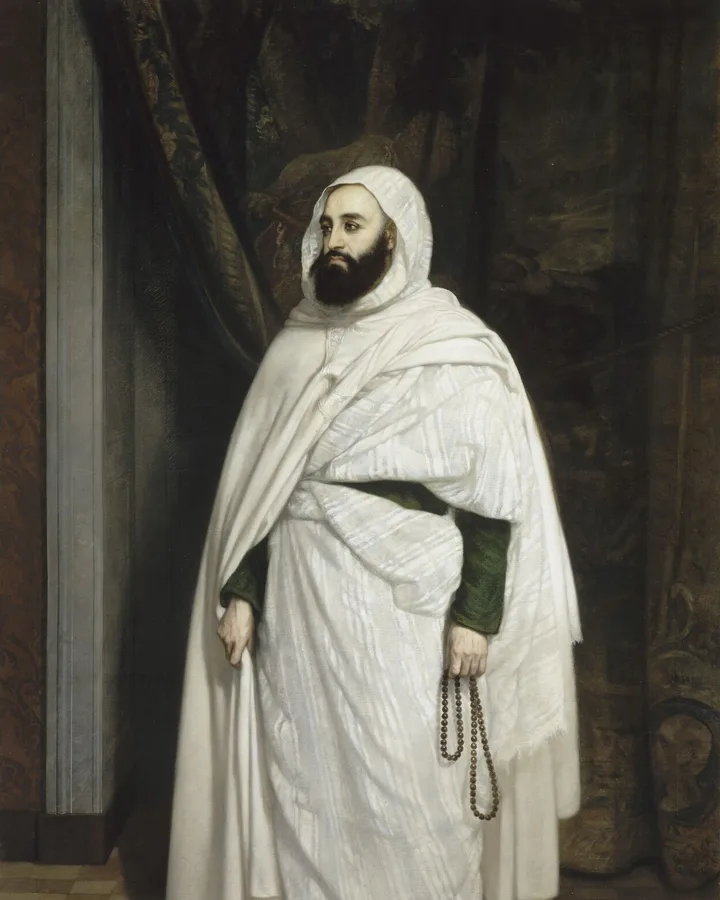
Emir Abdelkader
The scholar-warrior who fought France for fifteen years, then saved thousands of Christians in Damascus.
Not scored — never held executive office. How we score →
The rise
Born in 1808 near Mascara into a family of Sufi scholars, Abdelkader was a hafiz of the Quran and a horseman before he was twenty-five. When France invaded in 1830, the tribes of western Algeria elected him emir in 1832, and he built a state where none had existed: regular army, taxation, courts and fortified towns.
What they did
He fought the French army to a treaty in 1837, then waged a mobile war across the interior until Bugeaud's scorched-earth campaigns and Morocco's defection forced his surrender on 22 December 1847. In July 1860, exiled in Damascus, he and his sons sheltered thousands of Christians from massacre, earning the Légion d'honneur and gifts from Abraham Lincoln.
The full picture
France broke its promise of safe passage and held him prisoner until Napoleon III freed him in 1852; he then accepted a French pension and never returned to fight. Algerian nationalists later admired him, but his loyalty to France in exile, and his praise for Napoleon III, sit uneasily with the anti-colonial legend.
Why it matters
Abdelkader shows that resistance and mercy can be the same discipline: a man who fought a colonial army without hatred and defended his former enemies' faith on principle.
“What we did for the Christians, we did to be faithful to Islamic law and out of respect for human rights.”