 KemetLeads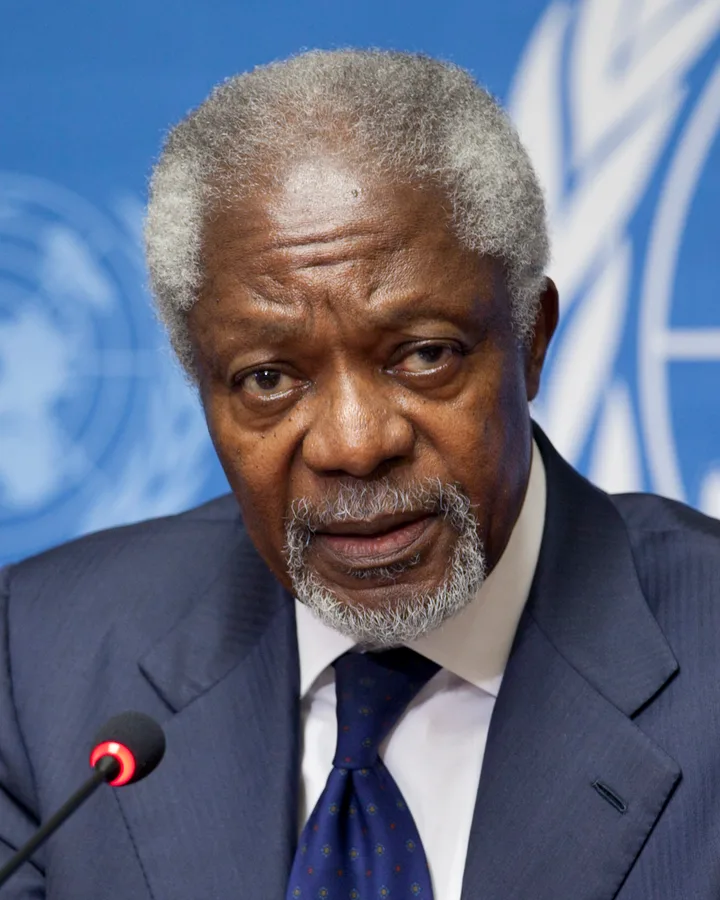
Kofi Annan
The first career UN staffer to lead the organization, who tried to give it a conscience.
The rise
Born in 1938 in Kumasi, Gold Coast, Annan studied economics in the United States and Switzerland, joined the World Health Organization's Geneva office in 1962, and spent three decades rising through the UN bureaucracy before heading its peacekeeping department in the 1990s.
What they did
He became the UN's seventh Secretary-General in 1997, the first drawn from the organization's own staff, pushed reforms including the Millennium Development Goals and the "Responsibility to Protect" doctrine, and shared the 2001 Nobel Peace Prize with the UN itself.
The full picture
His tenure was scarred by the UN's failure to stop the 1994 Rwandan genocide while he headed peacekeeping, and later by the Iraq Oil-for-Food scandal, where an internal inquiry found mismanagement on his watch though no personal corruption.
Why it matters
Annan tried to turn the UN from a forum of states into a moral actor in its own right, and the successes and scandals of his tenure still frame debates over what the institution can realistically do.
“We may have different religions, different languages, different colored skin, but we all belong to one human race.”