 KemetLeads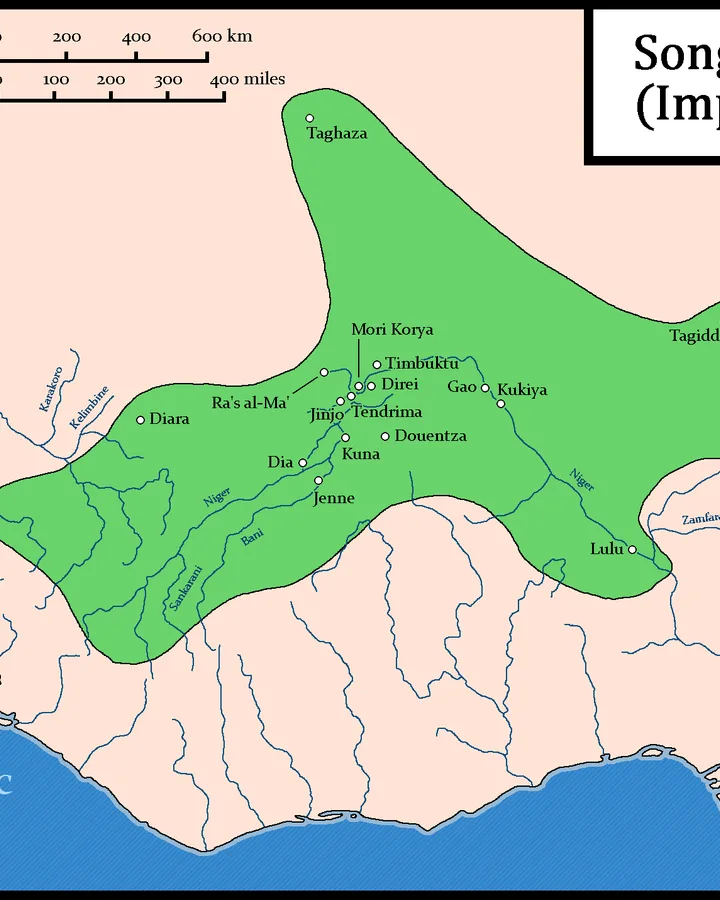
Askia Muhammad I
The general who seized an empire, then used it to make Timbuktu the intellectual capital of West Africa.
The rise
Born around 1443, Muhammad Ture served as a general under the Songhai ruler Sunni Ali before overthrowing Sunni Ali's heir in 1493 and founding the Askia dynasty, seizing control of an empire that already stretched across the Niger bend.
What they did
He reorganized Songhai's government into provinces under appointed governors, standardized weights, measures and taxation across the empire, and made a lavish 1496 pilgrimage to Mecca that drew scholars back to Timbuktu, cementing its reputation as a center of Islamic learning.
The full picture
His campaigns of conquest and forced conversions pushed Songhai to its largest territorial extent but strained the empire's cohesion, and in 1528, blind and elderly, he was overthrown and exiled to an island in the Niger River by his own son, Askia Musa.
Why it matters
Askia Muhammad turned Songhai into West Africa's largest empire and Timbuktu into a scholarly capital whose manuscripts still shape how the world understands precolonial Africa.