 KemetLeads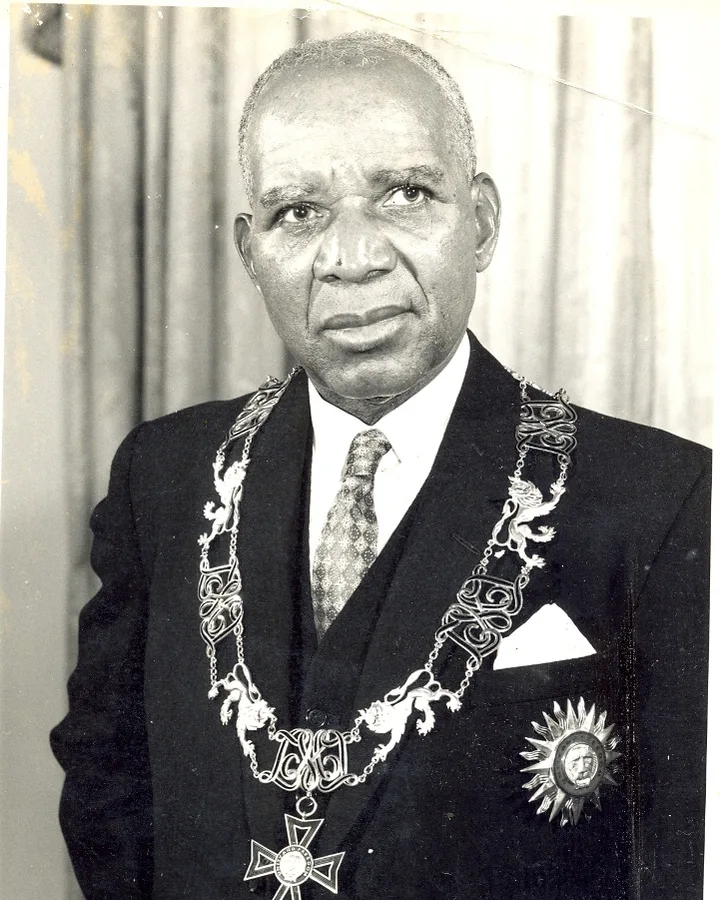
Hastings Banda
The Western-trained doctor who freed Malawi from colonial rule, then ruled it for three decades as one of Africa's most absolute and idiosyncratic dictators.
KemetLeads Scorecard
How we score →Won pre-independence elections, then ruled as president-for-life; accepted the 1993 referendum and conceded defeat in 1994.
P = percentile among the other African countries over the same years. Rows 1–4 are country-level change during the tenure — evidence, not proof.
Our read
Three decades of president-for-life rule, then the redeeming coda: he put his power to a referendum, lost, ran, lost again — and accepted it. The 2.5 splits the difference.
Power 1964–1994
Made president for life in 1971; accepted the 1993 referendum and lost the 1994 election.
Sources: Archigos 4.1 (Goemans, Gleditsch & Chiozza) · Powell & Thyne coup data V2026.08.29 · term-limit conduct coded by KemetLeads
The rise
After decades abroad earning medical degrees in the United States and Britain and practising in London, Banda returned in 1958 as an elder statesman to lead Nyasaland's independence movement, becoming prime minister at independence in 1964 and president when Malawi became a republic in 1966.
What they did
He led Malawi to independence and pursued a conservative, agriculture-focused stability, building infrastructure and presenting a façade of order and discipline that won Western approval during the Cold War.
The full picture
Declared Life President in 1971, he ran a personality cult and a brutal police state: an estimated thousands were killed, tortured, or jailed without trial, including the 1983 "Mwanza Four" cabinet murders. He alone among African leaders maintained warm ties with apartheid South Africa, imposed puritanical dress and speech codes, and amassed a vast personal business empire while many citizens stayed poor. Defeated in Malawi's first free election in 1994, he later offered a qualified apology for the suffering.
Why it matters
Banda is the cautionary archetype of the liberator turned tyrant, showing how nationalist credentials and a veneer of stability can mask one of the continent's most repressive and self-serving regimes.
“"Everything is my business. Everything. The state of education, the state of our economy, the state of our agriculture, the state of our transport, everything is my business."”