 KemetLeads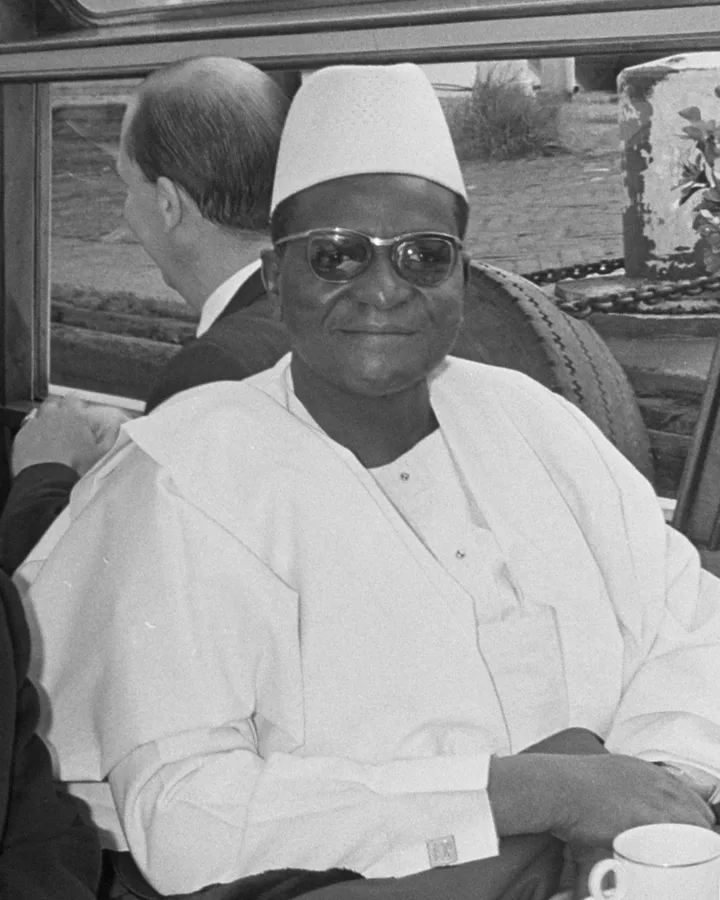
Hamani Diori
Niger's founding president, deposed by the famine his government failed to relieve.
KemetLeads Scorecard
How we score →Elected at independence but ruled a one-party state; famine mismanagement and diverted food aid preceded his overthrow in 1974.
P = percentile among the other African countries over the same years. Rows 1–4 are country-level change during the tenure — evidence, not proof.
Our read
P3 on development — GDP down 14% while the continent grew 31%, life expectancy flat — is the Sahel famine of the early 1970s and the food-aid scandal that followed. The coup that removed him in 1974 was popular for a reason.
Power 1960–1974
One-party state, no limits; overthrown in 1974.
Sources: Archigos 4.1 (Goemans, Gleditsch & Chiozza) · Powell & Thyne coup data V2026.08.29 · term-limit conduct coded by KemetLeads
The rise
Born in 1916 in Soudouré, Diori worked as a teacher before co-founding the Niger Progressive Party in 1946 and rising through French West Africa's colonial assembly to become Niger's prime minister in 1958.
What they did
He led Niger to independence from France in 1960 and served as its first president for fourteen years, earning respect abroad as a moderate Pan-Africanist statesman and mediator in regional disputes.
The full picture
His government grew corrupt and stalled economically, and when a severe Sahel drought produced mass famine in the early 1970s, army chief Seyni Kountché overthrew him in April 1974; Diori's wife was killed in the coup, and he spent the next thirteen years in prison or under house arrest.
Why it matters
Diori's fall is a cautionary tale of how a founding leader's authority can evaporate when governance fails to meet a real crisis, whatever his diplomatic standing abroad.