 KemetLeads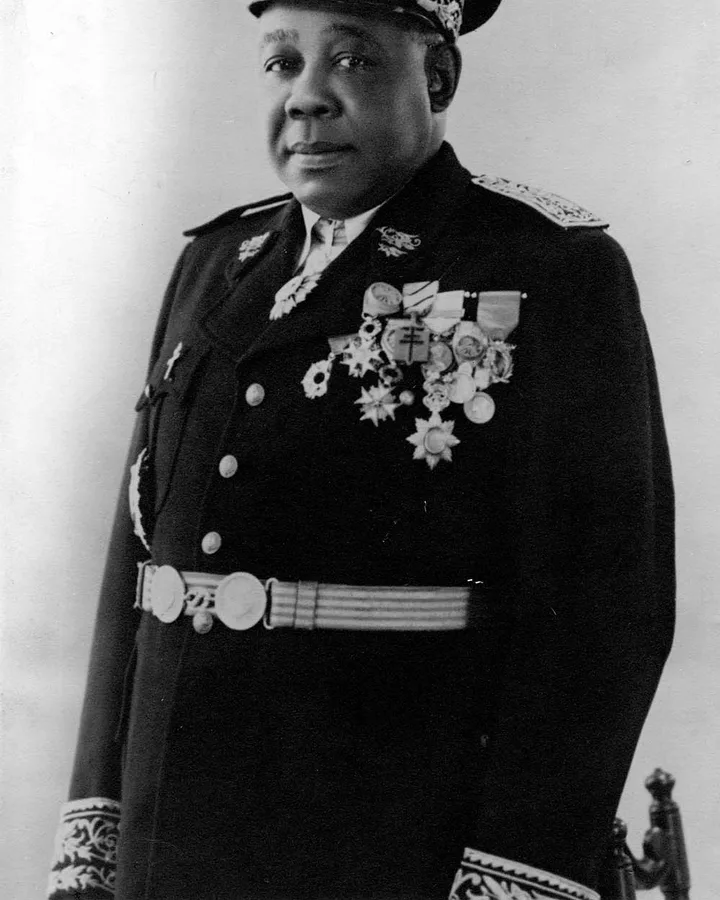
Félix Éboué
The Guianese grandson of enslaved people who handed de Gaulle his first territory.
Not scored — never held executive office. How we score →
The rise
Born in Cayenne in 1884 to a family descended from enslaved Africans, Éboué won a scholarship to Bordeaux and entered the colonial service in 1909, spending two decades as an administrator in Oubangui-Chari. He rose to secretary-general of Martinique, in 1936 to governor of Guadeloupe, the first Black man to govern a French colony, and in 1938 to governor of Chad.
What they did
On 26 August 1940, weeks after France's capitulation, Éboué declared Chad for Free France, the first territory to do so, and pulled the rest of French Equatorial Africa behind him; Leclerc's desert campaigns launched from his soil. As governor-general in Brazzaville he wrote a 'new native policy' respecting African chiefs and customs that shaped the 1944 Brazzaville Conference.
The full picture
He was a loyal servant of empire, not an anti-colonialist: his policy aimed to make French rule work better, and forced labour and the indigénat code persisted under him, while the Brazzaville Conference explicitly ruled out self-government. He died in Cairo in May 1944 and was interred in the Panthéon in 1949, the first Black person so honoured.
Why it matters
Éboué is the diaspora's most consequential imperial official: a Black man whose decision redrew the Second World War's map in Africa, and whose 'play the game' creed of merit and anti-racism still speaks to Guianese, Caribbean and African youth.
“To play the game is to trample on prejudice, every prejudice, and to learn to base the scale of values solely on the criteria of the mind.”