 KemetLeads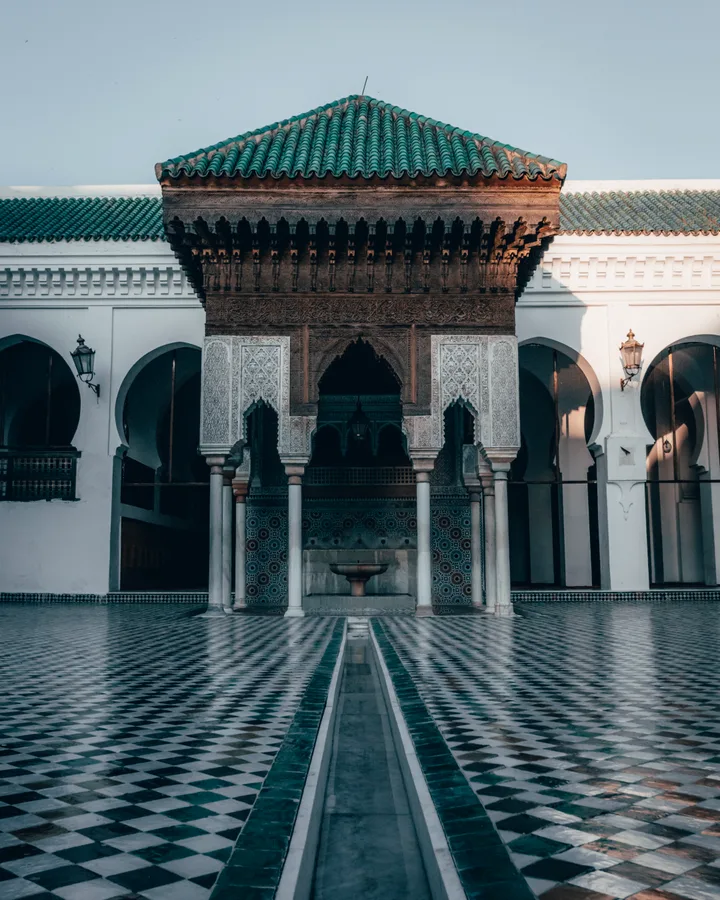
Fatima al-Fihri
The merchant's daughter credited with founding the oldest university still teaching.
The rise
Born in Kairouan, in present-day Tunisia, around 800, Fatima migrated with her family to Fez under the Idrisid dynasty, where her father Muhammad al-Fihri prospered as a merchant. On his death she and her sister Maryam inherited his fortune and, tradition holds, resolved to spend it on works for the community of Kairouanese émigrés.
What they did
In 859 she endowed the al-Qarawiyyin mosque, buying the land, quarrying its stone on site and reportedly fasting until the building was complete; Maryam is credited with the al-Andalus mosque across the river. Al-Qarawiyyin grew into a centre of learning associated with Ibn Khaldun, Maimonides and, by legend, the future Pope Sylvester II, and it still grants degrees today.
The full picture
Nearly everything known about her comes from Ibn Abi Zar', writing five centuries later, and historians doubt the tidy tale of two sisters and two mosques; a foundation inscription credits the Idrisid emir Dawud in 877. The medieval 'university' was a mosque school, and the modern degree-granting institution dates from 1963. She is a founder whose legend outruns the evidence.
Why it matters
Whatever the archaeology says, al-Fihri has become the emblem of Muslim women's patronage of learning, and al-Qarawiyyin's claim to be the world's oldest continuously operating university makes Fez a landmark in the global history of education. Her story asks who gets remembered as a founder, and why.