 KemetLeads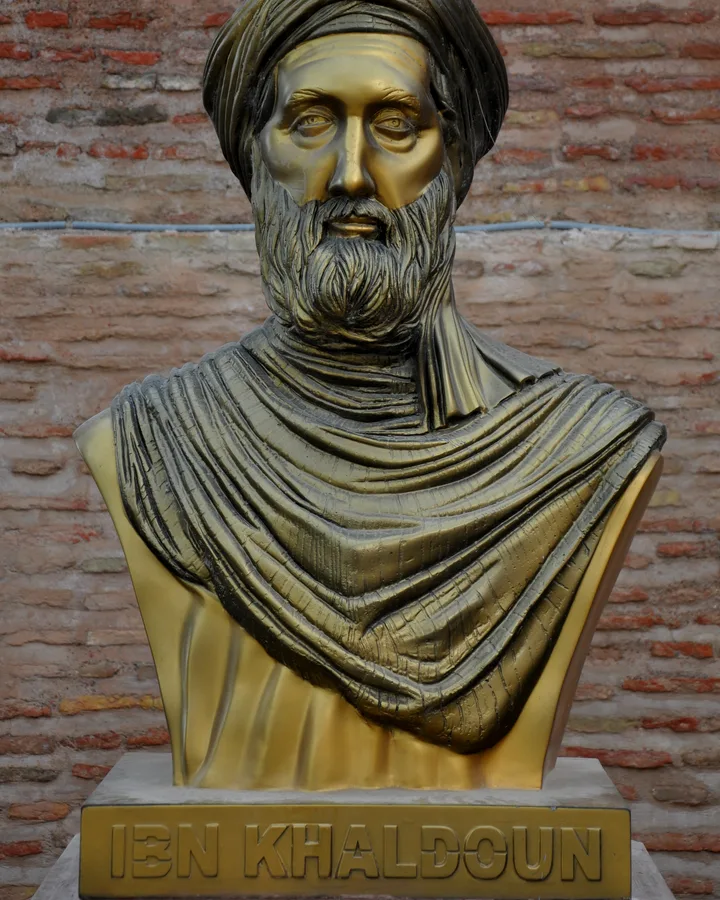
Ibn Khaldun
The Tunis-born courtier who, three centuries before Europe, worked out why empires rise and rot.
The rise
Born in Tunis on 27 May 1332 to an Andalusian family of scholars and officials, Ibn Khaldun lost his parents to the Black Death at sixteen and spent two decades as a secretary, envoy, plotter and prisoner in the courts of Tunis, Fez, Granada and Tlemcen. In 1375 he withdrew to the fortress of Qal'at Ibn Salama in Algeria to write.
What they did
There he composed the Muqaddimah, the introduction to a universal history, which argued that dynasties rise on 'asabiyya', group solidarity, and decay within a few generations as luxury dissolves it. In Cairo from 1382 he served six times as chief Maliki judge, and in 1401 he was lowered by rope over the walls of besieged Damascus to negotiate with Timur.
The full picture
He changed patrons and sides repeatedly, was jailed in Fez, and was dismissed from the judgeship again and again for rigour his colleagues found intolerable. Passages of the Muqaddimah on sub-Saharan Africans are frankly prejudiced, and his work was largely ignored in the Muslim world until Europeans rediscovered it in the nineteenth century.
Why it matters
Ibn Khaldun is the African founder of social science: a thinker who treated history as a system with causes, and whose theory of cohesion and decline still reads like a diagnosis of modern states.
“Government is an institution which prevents injustice other than such as it commits itself.”