 KemetLeads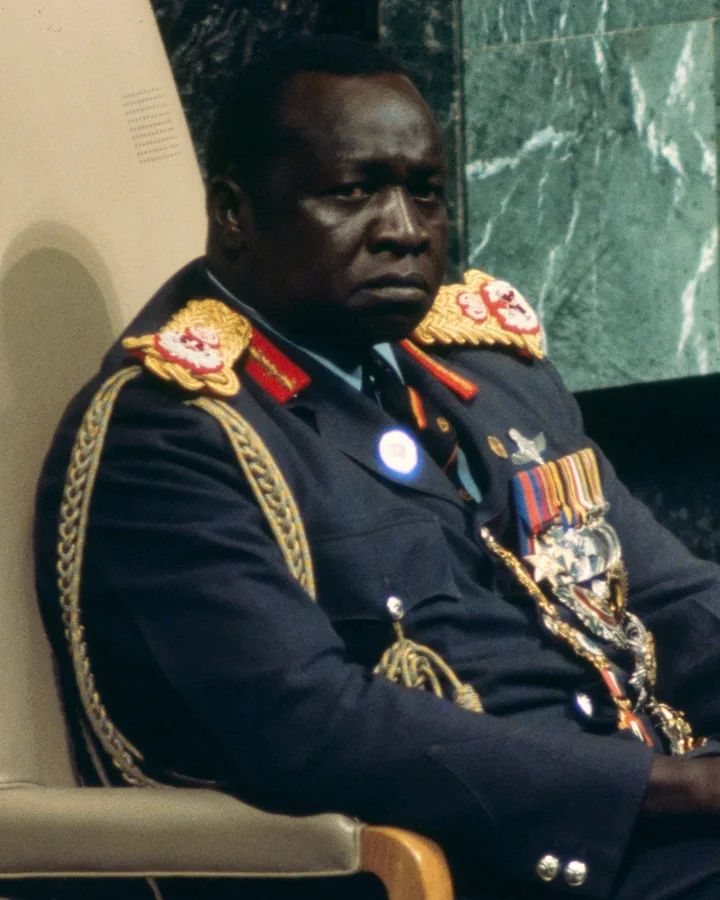
Idi Amin
The buffoon the world laughed at while he killed hundreds of thousands of his own people.
KemetLeads Scorecard
How we score →Took power by coup in 1971, ruled by terror with some 300,000 dead and the Asian expulsion, and fled in 1979 before Tanzanian troops.
P = percentile among the other African countries over the same years. Rows 1–4 are country-level change during the tenure — evidence, not proof.
Our read
P4 on development and P1 on life expectancy against the continent: Uganda lost ground on every row in eight years. The grid does not count the dead; the record does — some 300,000.
Power 1971–1979
Declared himself president for life in 1976; removed by Tanzanian forces and Ugandan exiles in 1979.
Sources: Archigos 4.1 (Goemans, Gleditsch & Chiozza) · Powell & Thyne coup data V2026.08.29 · term-limit conduct coded by KemetLeads
The rise
A Kakwa from Uganda's far north, Amin joined the King's African Rifles as an assistant cook in 1946 and rose through British colonial service in Kenya and Somalia to command the army under Milton Obote. On 25 January 1971, with Obote abroad, he seized power in a coup that Kampala initially cheered.
What they did
He expelled Uganda's roughly 60,000 Asians in August 1972, handing their businesses to cronies, declared himself field marshal and 'Conqueror of the British Empire', chaired the Organisation of African Unity in 1975, and ruled by whim and terror until Tanzanian forces and Ugandan exiles took Kampala on 11 April 1979.
The full picture
Between 100,000 and 500,000 people were killed under his rule, including Archbishop Janani Luwum and two cabinet ministers in 1977 and the hostage Dora Bloch after the 1976 Entebbe raid. The economy collapsed with the expulsions, the army became a machinery of ethnic murder, and he died unpunished in Jeddah in 2003.
Why it matters
Amin is the cautionary profile in this roster: proof that charisma, anti-colonial rhetoric and a laughing international press can shield a regime while it destroys a nation.
“I am not a politician but a professional soldier. I am therefore a man of few words and I have been brief throughout my professional career.”