 KemetLeads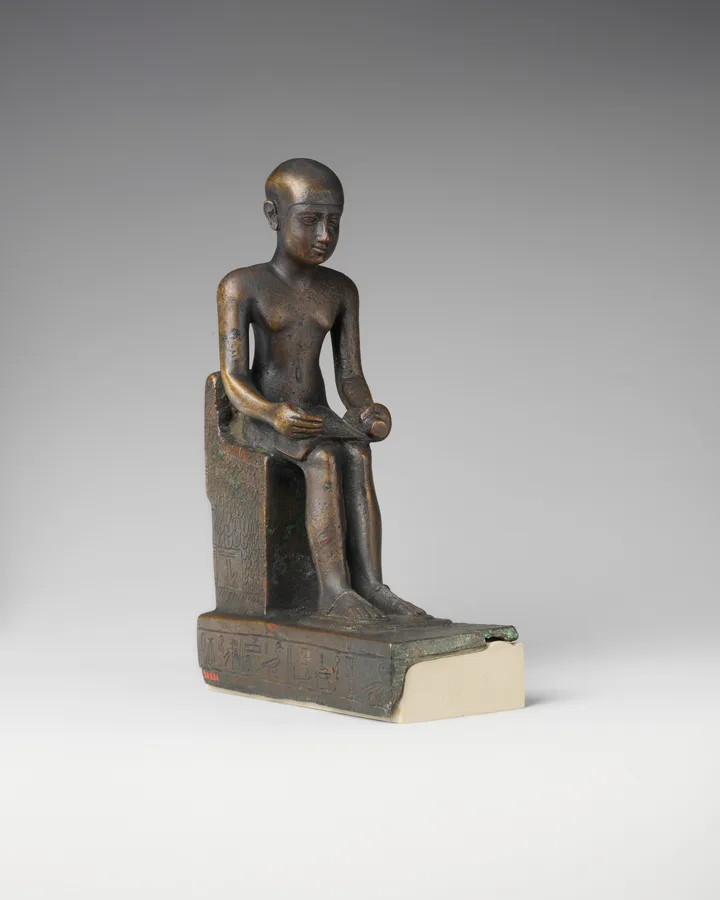
Imhotep
The commoner who built the world's first monumental stone building, and was worshipped as a god two thousand years later.
The rise
Almost nothing survives of Imhotep's origins; his name means 'he who comes in peace'. Under Djoser, around 2650 BC, he held the highest offices of the state, chancellor of the king of Lower Egypt and high priest of Ra at Heliopolis, and his titles appear on the base of a statue of the king himself, an honour no other official shared.
What they did
Egyptologists credit him with the Step Pyramid at Saqqara, the first large building of dressed stone anywhere, a stack of six mastabas rising sixty metres inside a vast walled complex that set the template for the pyramids of Giza. Two millennia later he was deified as a god of healing, identified by the Greeks with Asclepius.
The full picture
The Egyptians of his own time never explicitly named him as the pyramid's architect; the attribution rests on his titles and later tradition. There is no evidence he practised medicine, his reputation as physician, sage and author of the Edwin Smith papyrus is a much later cult, and his tomb has never been found.
Why it matters
Imhotep is the earliest named builder and intellectual in human history, and a reminder that Africa's genius for engineering and knowledge predates every empire that later claimed the continent.