 KemetLeads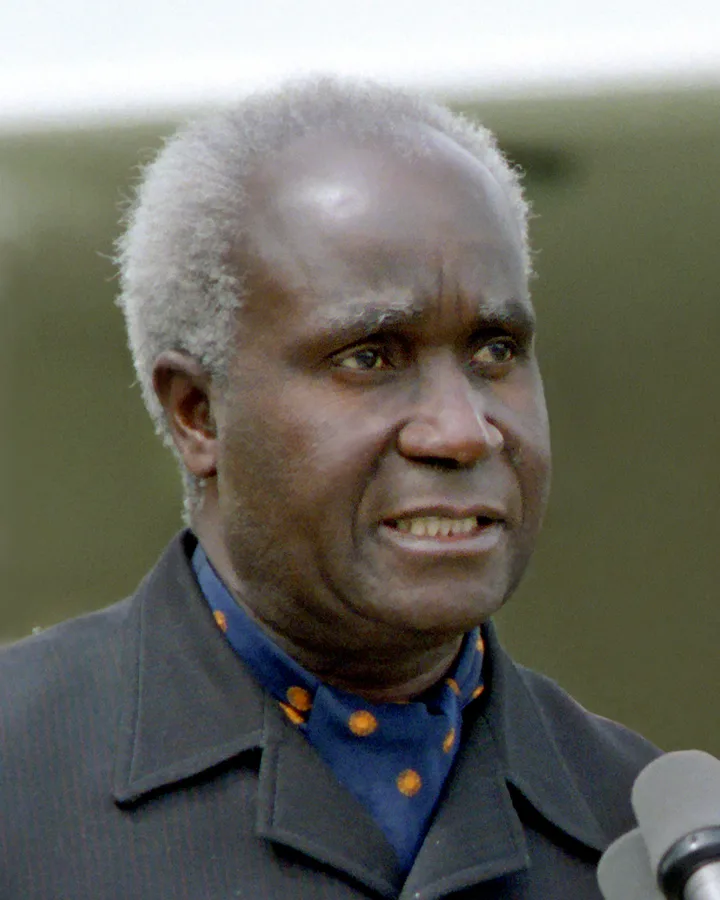
Kenneth Kaunda
'KK' — the humanist who hosted a continent's freedom fighters.
KemetLeads Scorecard
How we score →Elected, imposed a one-party state in 1973, but accepted multiparty rule and handed power over peacefully after losing in 1991.
P = percentile among the other African countries over the same years. Rows 1–4 are country-level change during the tenure — evidence, not proof.
Our read
KK's 3.1 is the score of a man who closed the political space in 1973 and then, when the moment came, opened the door and walked out with grace in 1991.
Power 1964–1991
One-party state 1972–91 without limits; accepted defeat in the 1991 multiparty election.
Sources: Archigos 4.1 (Goemans, Gleditsch & Chiozza) · Powell & Thyne coup data V2026.08.29 · term-limit conduct coded by KemetLeads
The rise
A teacher and independence activist, Kaunda led Zambia to freedom from British rule in 1964.
What they did
Guided by his philosophy of 'Zambian Humanism', he made Zambia a frontline supporter of liberation movements across southern Africa, sheltering the ANC and others.
The full picture
Copper dependence and one-party rule brought economic decline — but in 1991 he accepted electoral defeat and handed over power peacefully, a rare grace.
Why it matters
Kaunda paired pan-African solidarity with a willingness to leave office — a model too few of his peers followed.
“Man must be at the centre of all our activity.”