 KemetLeads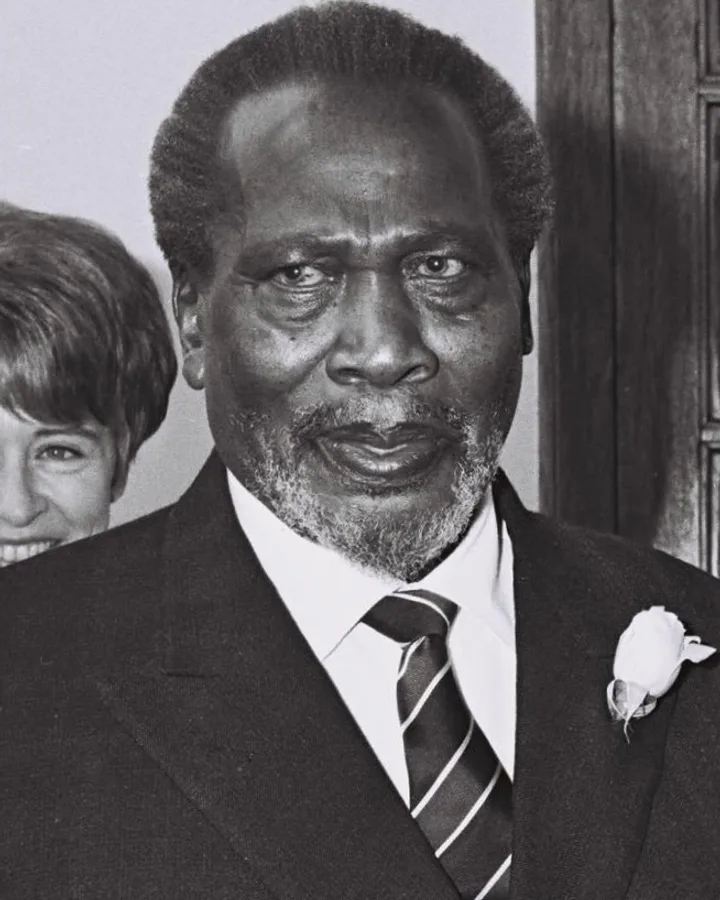
Jomo Kenyatta
The 'Mzee' who led Kenya from colony to nation.
KemetLeads Scorecard
How we score →Elected at independence but ruled a de facto one-party state marked by political violence; died in office with a stability-first record.
P = percentile among the other African countries over the same years. Rows 1–4 are country-level change during the tenure — evidence, not proof.
Our read
Independence's towering Mzee ran a de facto one-party state, and the numbers cannot see past it. Kenya's stability-first path — its benefits and its costs — starts with his choices.
Power 1963–1978
The independence constitution set no limit; died in office in 1978.
Sources: Archigos 4.1 (Goemans, Gleditsch & Chiozza) · Powell & Thyne coup data V2026.08.29 · term-limit conduct coded by KemetLeads
The rise
Detained by the British during the Mau Mau emergency, Kenyatta emerged from years in prison to lead Kenya to independence in 1963.
What they did
He unified a young multi-ethnic nation under the rallying cry 'Harambee' (pulling together), expanded education, and built a stable, business-friendly economy.
The full picture
His rule grew centralized and personalized, and land policies favoring his allies and community sowed grievances that still echo in Kenyan politics.
Why it matters
Kenyatta is the founding father of modern Kenya — embodying both the promise and the unfinished business of independence.
“Our children may learn about the heroes of the past. Our task is to make ourselves the architects of the future.”