 KemetLeads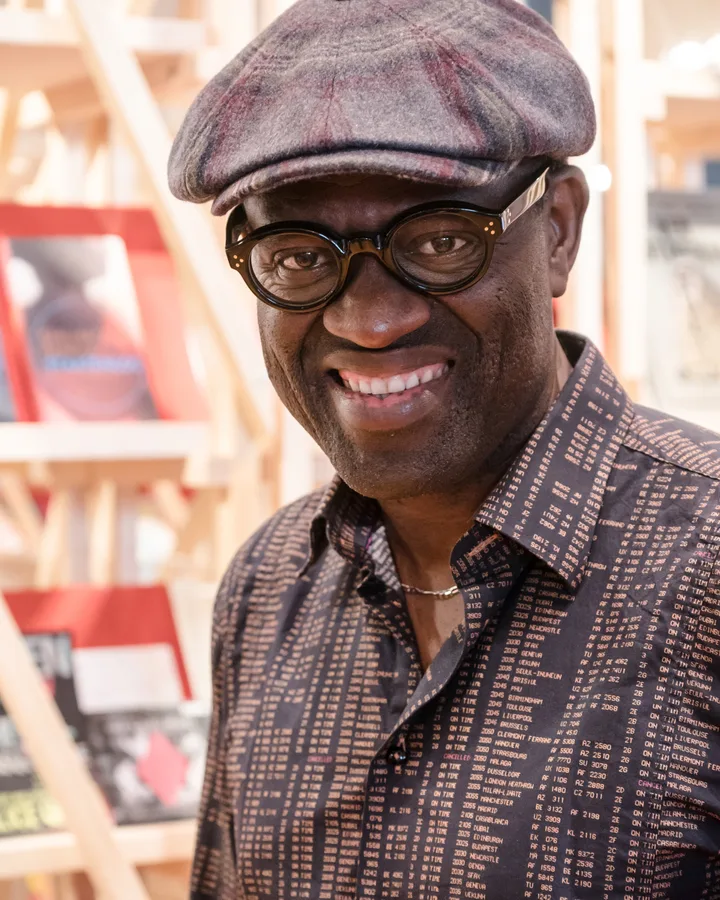
Alain Mabanckou
The Pointe-Noire kid who made French literature admit it was never only French.
The rise
Born in 1966 in Pointe-Noire and raised by a mother who could not read, Mabanckou studied law in Brazzaville and Paris and spent a decade at the Suez-Lyonnaise des Eaux group while publishing poetry. His first novel, Bleu-Blanc-Rouge (1998), won the Grand Prix littéraire d'Afrique noire; Verre cassé (2005) turned him into a star.
What they did
Mémoires de porc-épic won the Prix Renaudot in 2006, and Black Bazar, Petit Piment and Lumières de Pointe-Noire followed, translated into some two dozen languages. Professor at UCLA since 2006, he held the Collège de France chair of artistic creation in 2015–16, and his lecture 'Lettres noires' demanded that African writing be read as literature, not as ethnography.
The full picture
Critics in Brazzaville call him a Parisian and a Californian who lectures Congo from afar; in 2018 he publicly refused Emmanuel Macron's invitation to work on a Francophonie project, accusing the institution of shielding dictators, his own country's included. His breezy, bar-room narrators are sometimes accused of playing to Western expectations of African exuberance.
Why it matters
Mabanckou has done more than anyone of his generation to move African fiction in French from the margins to the centre, and his outspokenness on Denis Sassou Nguesso's rule keeps literature tied to politics. He proves that a writer can be Congolese, French and Californian without asking anyone's permission.
“I belong to a generation of writers who break down barriers and refuse the compartmentalisation of the imagination.”