 KemetLeads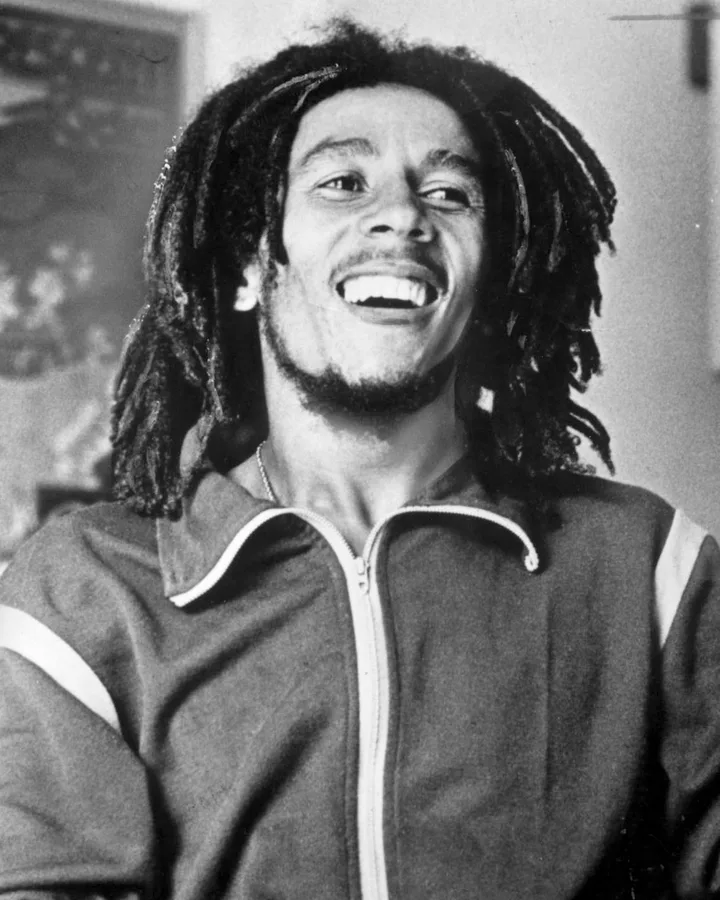
Bob Marley
The Trenchtown singer who turned a Jamaican street rhythm into the anthem of the world's poor and Africa's liberation.
The rise
Born in Nine Mile in 1945 to a Black Jamaican mother and a white English father who abandoned them, Marley grew up in Kingston's Trenchtown and formed The Wailers with Peter Tosh and Bunny Wailer in 1963. Rastafari, embraced in the late 1960s, gave his music a theology of African redemption, and Island Records gave it the world from 1973.
What they did
Albums from Catch a Fire to Exodus and Survival carried reggae onto every continent, and Marley used the stage politically: he played the Smile Jamaica concert two days after being shot in December 1976, joined the hands of rivals Michael Manley and Edward Seaga at the One Love Peace Concert in 1978, and performed at Zimbabwe's independence celebration on 17 April 1980.
The full picture
He fathered eleven acknowledged children by seven women, and his wife Rita later spoke of a marriage marked by infidelity and, in one 2004 account, coercion. He refused amputation of a cancerous toe in 1977 on religious grounds; the melanoma spread and killed him at 36 in Miami on 11 May 1981, leaving a fortune fought over for decades.
Why it matters
Marley made Pan-Africanism singable. Fifty years on, his songs are still the shared language of protest from Soweto to Port-au-Prince, and the proof that culture can lead where politics stalls.
“Possession make you rich? I don't have that type of richness. My richness is life, forever.”