 KemetLeads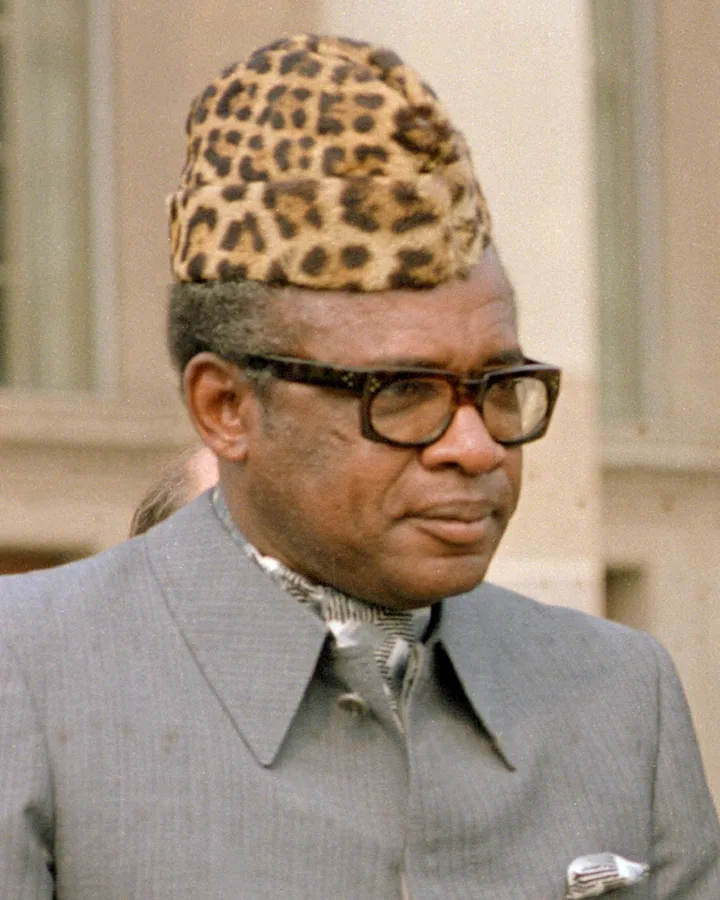
Mobutu Sese Seko
The leopard-hatted strongman who renamed a country, plundered it for three decades, and died in exile.
KemetLeads Scorecard
How we score →Seized power in 1965, ran a one-man state with single-candidate 'elections', looted Zaire for three decades and fled in 1997 as Kabila's forces entered Kinshasa.
P = percentile among the other African countries over the same years. Rows 1–4 are country-level change during the tenure — evidence, not proof.
Our read
GDP per capita −55% while the continent grew 22%: the cleanest measurement of kleptocracy on this platform. Health improved at the continental pace despite him. Zero on conduct, exile at the end.
Power 1965–1997
One-party state from 1970 with no limits; the 1990 promise of elections was never kept.
Sources: Archigos 4.1 (Goemans, Gleditsch & Chiozza) · Powell & Thyne coup data V2026.08.29 · term-limit conduct coded by KemetLeads
The rise
Born Joseph-Désiré Mobutu in 1930 in Lisala, Belgian Congo, he worked as a journalist and army officer before seizing power in a 1965 coup, backed by Western governments eager for a Cold War ally in Central Africa after years of post-independence turmoil.
What they did
He renamed the country Zaire and himself Mobutu Sese Seko, built a personality cult around his leopard-skin hat, and held the vast, ethnically fractured country together for 32 years while positioning it as a key US and Belgian ally against Soviet influence in the region.
The full picture
He looted billions of dollars in state and mining revenue into personal fortune while the economy collapsed and infrastructure crumbled, ran a one-party state that jailed and tortured dissidents, and was finally toppled in 1997 by Laurent Kabila's rebellion, dying of cancer in exile in Morocco months later.
Why it matters
Mobutu's rule is the textbook case of Cold War kleptocracy, showing how a strategically useful dictator could loot a resource-rich state for decades with the tacit backing of foreign powers.
“For authenticity not only implies a profound knowledge of one's own culture, but also a respect for the cultural heritage of others.”