 KemetLeads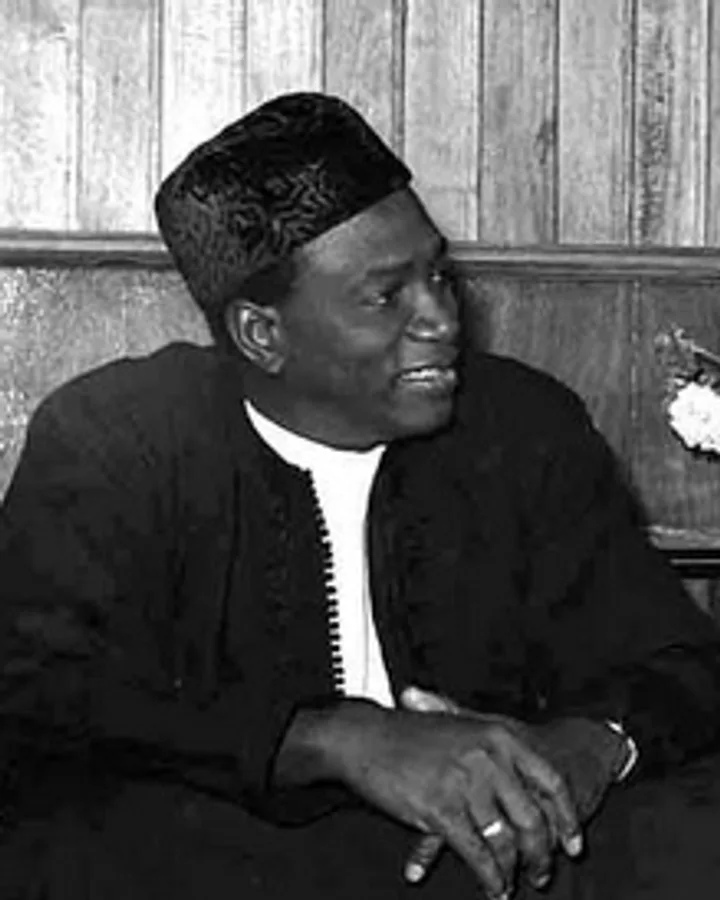
Modibo Keïta
The schoolteacher who claimed the mantle of the medieval Mali Empire and led his nation into independence on a bold but doomed socialist path.
KemetLeads Scorecard
How we score →Elected at independence, drifted into one-party radicalism; overthrown in 1968.
P = percentile among the other African countries over the same years. Rows 1–4 are country-level change during the tenure — evidence, not proof.
Our read
Mali's first president chose socialism and the single party, and the Malian franc chose collapse. Overthrown in 1968; the 1.3 records a founding vision that outran its economics.
Power 1960–1968
One-party state; overthrown in 1968.
Sources: Archigos 4.1 (Goemans, Gleditsch & Chiozza) · Powell & Thyne coup data V2026.08.29 · term-limit conduct coded by KemetLeads
The rise
A teacher from Bamako who claimed descent from the Keita dynasty, he co-founded the Sudanese Union (US-RDA) in the 1940s, rose through French colonial and West African politics, and brought French Sudan to independence as Mali in 1960 after the brief Mali Federation with Senegal collapsed.
What they did
He built a one-party state on "African socialism," nationalising industry and trade, championing Pan-Africanism, and forging ties with the communist bloc, for which he won the Lenin Peace Prize.
The full picture
His socialism produced economic crisis: a flight from the franc zone, a collapsing currency, food shortages, and a coercive, increasingly authoritarian single-party rule that alienated traders and farmers. A poor 1968 harvest helped trigger the coup by Moussa Traoré that deposed him; he died in prison in 1977, widely believed to have been killed.
Why it matters
Modibo Keïta typifies the idealism and the pitfalls of first-generation African socialism, where Pan-African vision and dignity collided with the hard economics of building a landlocked new state.
“"We have chosen the socialist path because it is the only road that can lead our country out of underdevelopment."”