 KemetLeads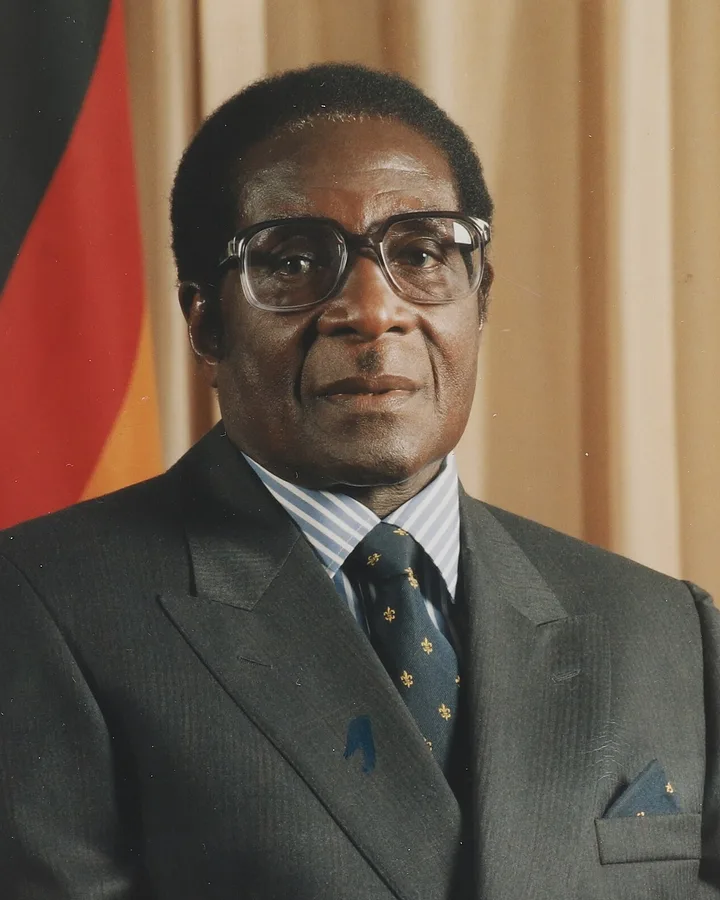
Robert Mugabe
The liberation hero whose long rule became a cautionary tale.
KemetLeads Scorecard
How we score →Won the 1980 elections, then bent the constitution and elections to stay; removed by the military in 2017; early gains erased by collapse.
P = percentile among the other African countries over the same years. Rows 1–4 are country-level change during the tenure — evidence, not proof.
Our read
The data traces the full arc: liberation hero elected in 1980, then a 37-year hold on power that ended with rule of law sixteen points lower and the military at his door.
Power 1980–2017
The 2013 constitution's two-term limit was written not to count his earlier terms; removed by the army in 2017.
Sources: Archigos 4.1 (Goemans, Gleditsch & Chiozza) · Powell & Thyne coup data V2026.08.29 · term-limit conduct coded by KemetLeads
The rise
A teacher imprisoned for a decade, Mugabe led the guerrilla struggle against white-minority rule and became independent Zimbabwe's first leader in 1980.
What they did
His early years brought dramatic gains in education and health, giving Zimbabwe one of Africa's most literate populations and an early model of reconciliation.
The full picture
But he clung to power for 37 years; chaotic land seizures and political repression collapsed the economy into hyperinflation, and he was finally removed by his own party in 2017.
Why it matters
Mugabe is the continent's starkest lesson in how liberation credentials can curdle into authoritarianism when power is never relinquished.
“If yesterday I fought as an enemy, today you have become a friend and ally with the same national interest, loyalty, rights and duties as myself.”