 KemetLeads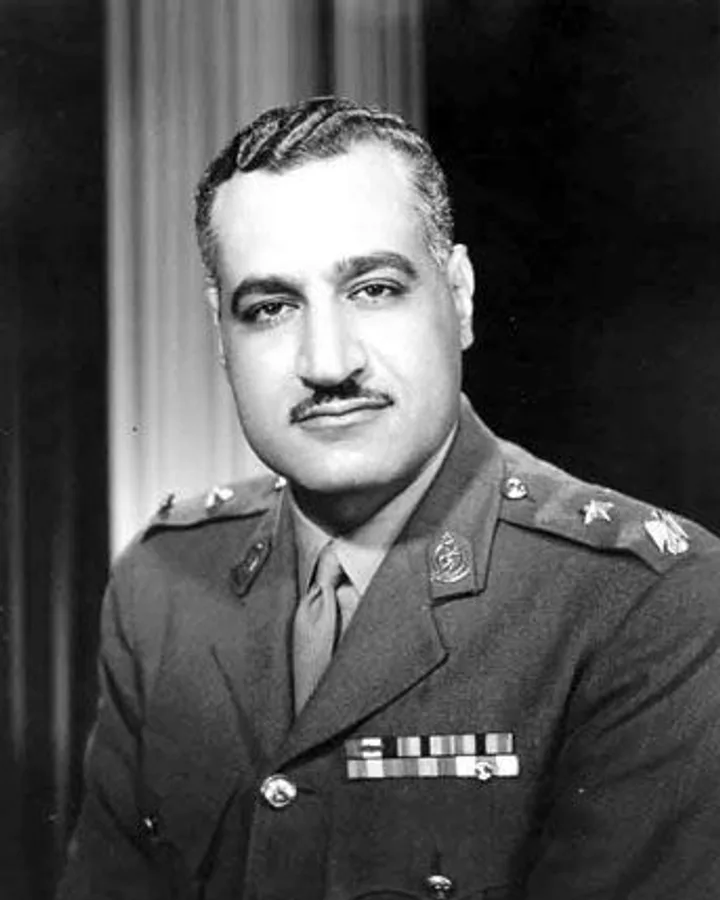
Gamal Abdel Nasser
The officer who nationalized the Suez Canal and made Cairo a capital of the Global South.
KemetLeads Scorecard
How we score →Came to power through the 1952 coup and ruled a one-party state; died in office; major reforms shadowed by police-state repression.
P = percentile among the other African countries over the same years. Rows 1–4 are country-level change during the tenure — evidence, not proof.
Our read
The scorecard sees the police state; the street remembers Suez, the High Dam and Arab dignity. Both are true — which is why his 0.8 sits under one of the most consequential careers on this platform.
Power 1954–1970
No term limit under the 1956 and 1964 constitutions; died in office.
Sources: Archigos 4.1 (Goemans, Gleditsch & Chiozza) · Powell & Thyne coup data V2026.08.29 · term-limit conduct coded by KemetLeads
The rise
An army officer, Nasser led the 1952 revolution that toppled the monarchy and ended British domination of Egypt.
What they did
He nationalized the Suez Canal in 1956 and faced down Britain, France, and Israel; championed pan-Arabism and pan-Africanism; co-founded the Non-Aligned Movement; and built the Aswan High Dam.
The full picture
At home his rule was authoritarian, with a single party and suppressed dissent; abroad, the crushing 1967 defeat to Israel shattered his project's momentum.
Why it matters
Nasser embodied post-colonial defiance and gave smaller nations a template for asserting sovereignty against great powers.
“Raise your head, my brother; the days of servitude are over.”