 KemetLeads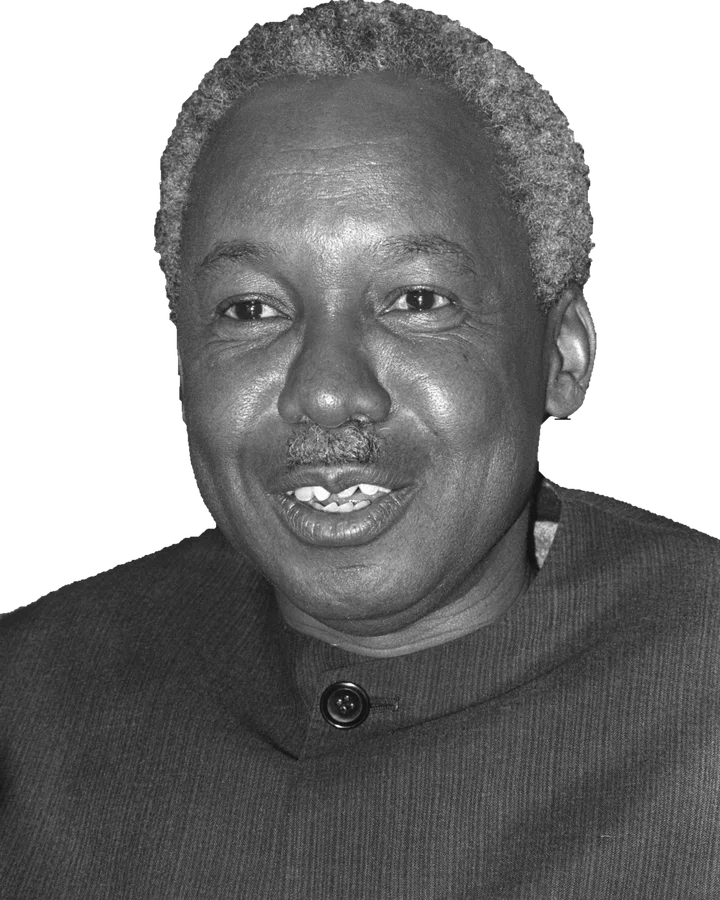
Julius Nyerere
The teacher-president who put nation-building above personal power.
KemetLeads Scorecard
How we score →Elected, but ran a one-party state; retired voluntarily in 1985 — a rare peaceful exit — with a mixed development record.
P = percentile among the other African countries over the same years. Rows 1–4 are country-level change during the tenure — evidence, not proof.
Our read
One-party rule keeps the score at 3.8, but the voluntary retirement in 1985 — almost unheard of then — and clean hands on power explain why Tanzanians still call him Mwalimu.
Power 1961–1985
One-party state without term limits; retired voluntarily in 1985 after 24 years.
Sources: Archigos 4.1 (Goemans, Gleditsch & Chiozza) · Powell & Thyne coup data V2026.08.29 · term-limit conduct coded by KemetLeads
The rise
A teacher by training — hence 'Mwalimu' — Nyerere led Tanganyika to independence and unified it with Zanzibar to form Tanzania in 1964.
What they did
He forged a rare national unity across hundreds of ethnic groups through Swahili and a shared identity, expanded literacy and healthcare, and was a leading voice of African liberation, backing freedom movements across southern Africa.
The full picture
His Ujamaa socialist villagization program failed economically and forced relocations hurt rural communities. He later admitted its shortcomings — a rare act of accountability — and voluntarily stepped down in 1985.
Why it matters
Nyerere modelled integrity and the peaceful surrender of power, leaving a stable, cohesive nation in a region scarred by conflict.
“It can be done, play your part.”