 KemetLeads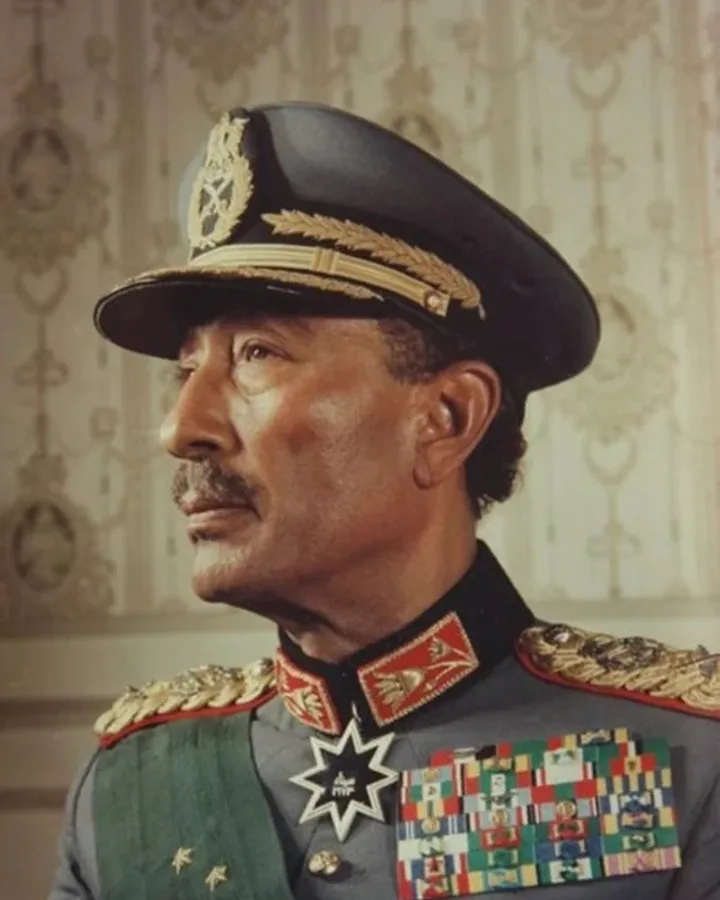
Anwar Sadat
The soldier-statesman who launched a war to make peace, winning a Nobel Prize and an assassin's bullet for the same decision.
KemetLeads Scorecard
How we score →Inherited power constitutionally within an authoritarian system; made peace with Israel; assassinated weeks after a mass crackdown.
P = percentile among the other African countries over the same years. Rows 1–4 are country-level change during the tenure — evidence, not proof.
Our read
The scorecard cannot price Camp David. It prices how power was held: emergency law, a locked system, and a crackdown weeks before the assassination. Both ledgers are his.
Power 1970–1981
A 1980 amendment removed the two-term limit; assassinated in 1981.
Sources: Archigos 4.1 (Goemans, Gleditsch & Chiozza) · Powell & Thyne coup data V2026.08.29 · term-limit conduct coded by KemetLeads
The rise
A career army officer and one of the Free Officers who overthrew the monarchy in 1952, Sadat served as Nasser's vice-president and succeeded him on his death in 1970, soon consolidating power and reorienting Egypt away from the Soviet Union.
What they did
He launched the October 1973 war that restored Egyptian pride after 1967, then stunned the world by visiting Jerusalem in 1977 and signing the 1978 Camp David Accords and 1979 peace treaty with Israel, sharing the 1978 Nobel Peace Prize and recovering the Sinai.
The full picture
His infitah economic opening widened inequality and sparked the 1977 bread riots; the peace with Israel left him isolated in the Arab world and Egypt suspended from the Arab League; and at home he jailed hundreds of critics across the political spectrum in 1981, deepening the resentment among Islamists who assassinated him that October.
Why it matters
Sadat shows the lonely cost and courage of peacemaking, and how a leader celebrated abroad can be reviled at home; his choices still shape the Arab-Israeli order and Egypt's strategic alignment decades later.
“Any life lost in war is a human life, irrespective of its being that of an Israeli or an Arab.”