 KemetLeads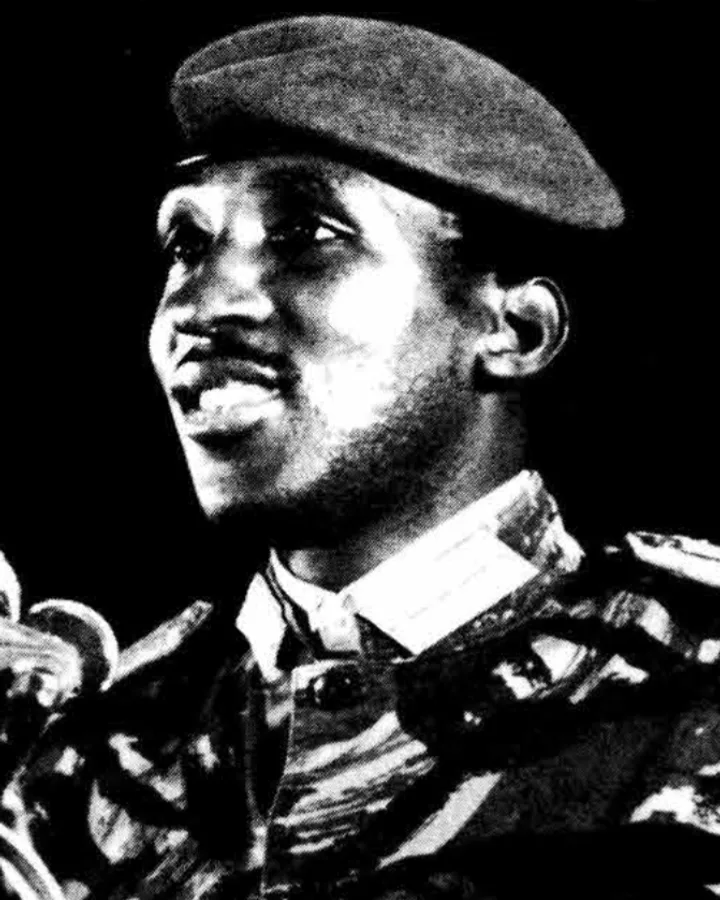
Thomas Sankara
'Africa's Che Guevara' — the young radical who tried to remake a nation in four years.
KemetLeads Scorecard
How we score →Took power by coup and ruled by decree; delivered striking health, literacy and women's-rights gains before his assassination in 1987.
P = percentile among the other African countries over the same years. Rows 1–4 are country-level change during the tenure — evidence, not proof.
Our read
A coup leader who scores near the bottom on conduct and near the top in memory. That tension is the point: his revolution delivered vaccines and dignity, but never submitted itself to a vote.
Power 1983–1987
Revolutionary council; no constitution in force.
Sources: Archigos 4.1 (Goemans, Gleditsch & Chiozza) · Powell & Thyne coup data V2026.08.29 · term-limit conduct coded by KemetLeads
The rise
A charismatic military officer, Sankara took power at 33 and renamed Upper Volta 'Burkina Faso' — 'land of upright people.'
What they did
In four years he launched mass vaccination and literacy campaigns, planted millions of trees against desertification, championed women's rights, and rejected aid dependency — selling the government's Mercedes fleet for economy cars.
The full picture
His rule was also authoritarian — he banned unions and a free press, drawing criticism even from allies. He was assassinated in 1987 in a coup led by his close associate Blaise Compaoré.
Why it matters
Sankara remains a continental icon of integrity and self-reliance, especially for young Africans frustrated with corruption and dependency.
“It's true, you cannot kill ideas. Ideas do not die.”