 KemetLeads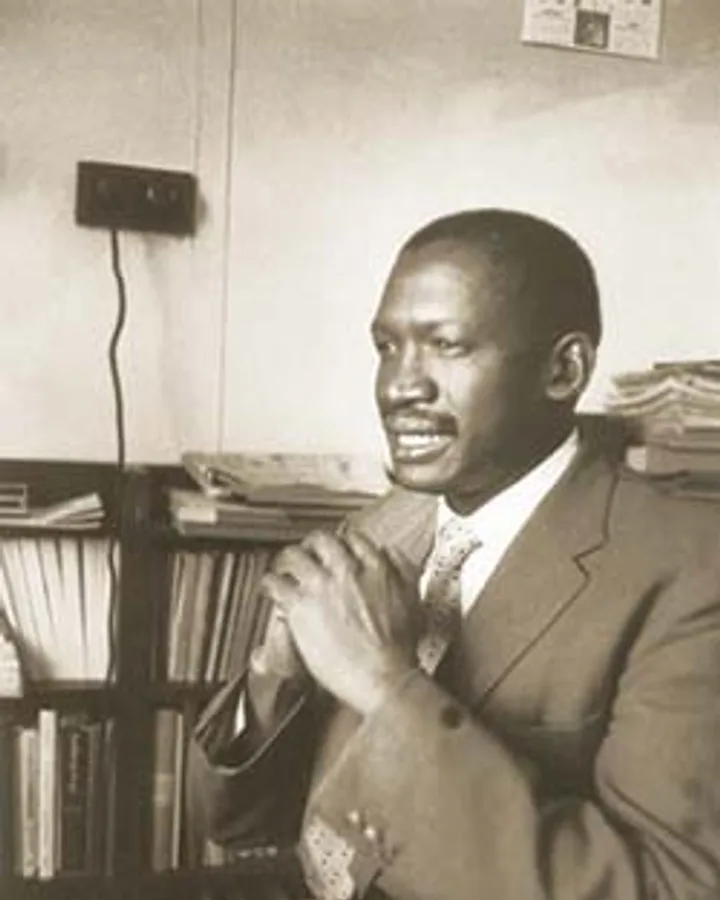
Robert Sobukwe
The brilliant Africanist whose name became a law unto itself, jailed under a clause written for him alone.
Not scored — never held executive office. How we score →
The rise
A university lecturer and gifted orator, Sobukwe broke from the ANC in 1959, arguing it had become too multiracial and gradualist, and founded the Pan Africanist Congress on a creed of African self-reliance and majority rule.
What they did
In March 1960 he led the anti-pass campaign that triggered the Sharpeville massacre, presenting himself for arrest. Convicted of incitement, he was held an extra six years on Robben Island in near-total solitary confinement under the "Sobukwe Clause," a law renewed annually and never applied to anyone else, making him a global symbol of apartheid's lawless power.
The full picture
His Africanism, defined as allegiance to Africa rather than race, was principled, but its harder edges fed an exclusivist current that troubled allies; his slogan-driven 1960 campaign also arguably outran the PAC's organisational readiness, contributing to the carnage at Sharpeville. Banned and broken in health, he died sidelined while the ANC eclipsed his movement.
Why it matters
Once spoken of in the same breath as Mandela, Sobukwe represents the road not taken in South African liberation and the high cost the regime paid to erase a leader it genuinely feared.
“"There is only one race, the human race."”