 KemetLeads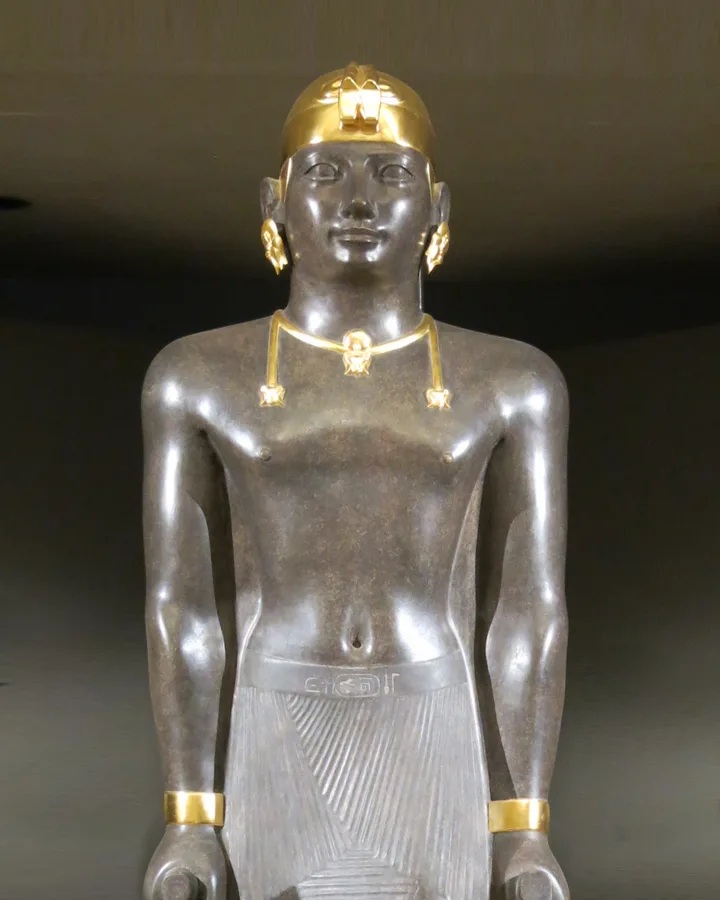
Taharqa
The Nubian pharaoh who ruled an empire from the Sudan to the Mediterranean and clashed with the Assyrian superpower of his age.
The rise
A prince of the Kushite kingdom of Napata, he came to Egypt as part of his predecessors' conquest and took the throne in 690 BC, uniting Nubia and Egypt under the "Black Pharaohs" of the 25th Dynasty.
What they did
He presided over a cultural and building renaissance—restoring temples and raising monuments at Karnak, Kawa and across Nubia—during a prosperous reign aided by exceptional Nile floods, and projected Kushite power across one of the largest empires in the ancient Nile world.
The full picture
His reign was also defined by losing struggles against Assyria: Esarhaddon captured Memphis and his family in 671 BC, and Ashurbanipal later routed him entirely, forcing him to flee south, where he died—the high tide before the 25th Dynasty's expulsion from Egypt. He is generally identified with the biblical "Tirhakah," though the chronology poses puzzles.
Why it matters
Taharqa is enduring proof that Black African rulers governed and revitalised one of antiquity's greatest civilisations, anchoring Kush and Nubia firmly within world history rather than its margins.
“Of his Nile-flood year he declared the harvest "more beautiful than anything," a reign blessed by the gods.”