 KemetLeads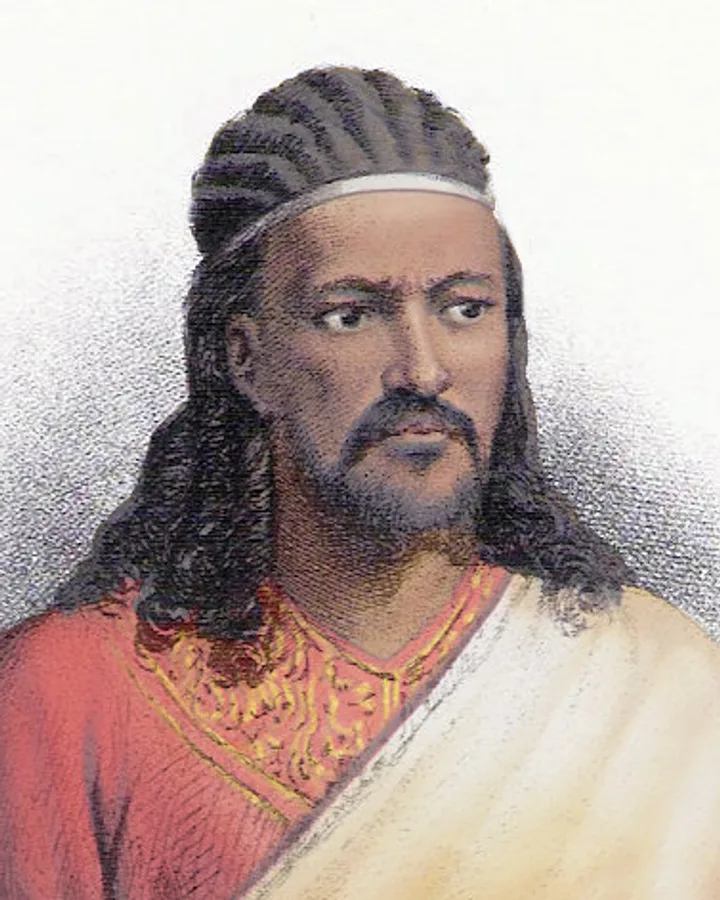
Tewodros II
The warrior-reformer who dragged a fractured Ethiopia toward modern statehood and died rather than surrender it.
The rise
Of relatively modest origins, he rose as a regional warlord during the Zemene Mesafint, the Era of the Princes, defeating rival nobles one by one until he was crowned emperor in 1855.
What they did
He reunified the warring Ethiopian kingdoms, tried to build a national army and a nobility based on merit rather than birth, sought to bring the powerful church under royal control, and reached out to Britain for help modernising the country.
The full picture
His reforms were harsh and often violent, alienating the church and nobility, and his temper proved disastrous: when Britain ignored his letter to Queen Victoria he imprisoned European envoys, triggering the 1868 Magdala expedition. Cornered by Napier's army, he shot himself rather than be captured, leaving his project unfinished.
Why it matters
He is widely seen as the founder of modern Ethiopia, embodying both the promise and the peril of forced, top-down modernisation and a fierce insistence on sovereignty that still resonates across the continent.
“"I know the tactics of European governments when they desire to acquire an Eastern state; first they send out missionaries, then consuls, and then battalions."”