 KemetLeads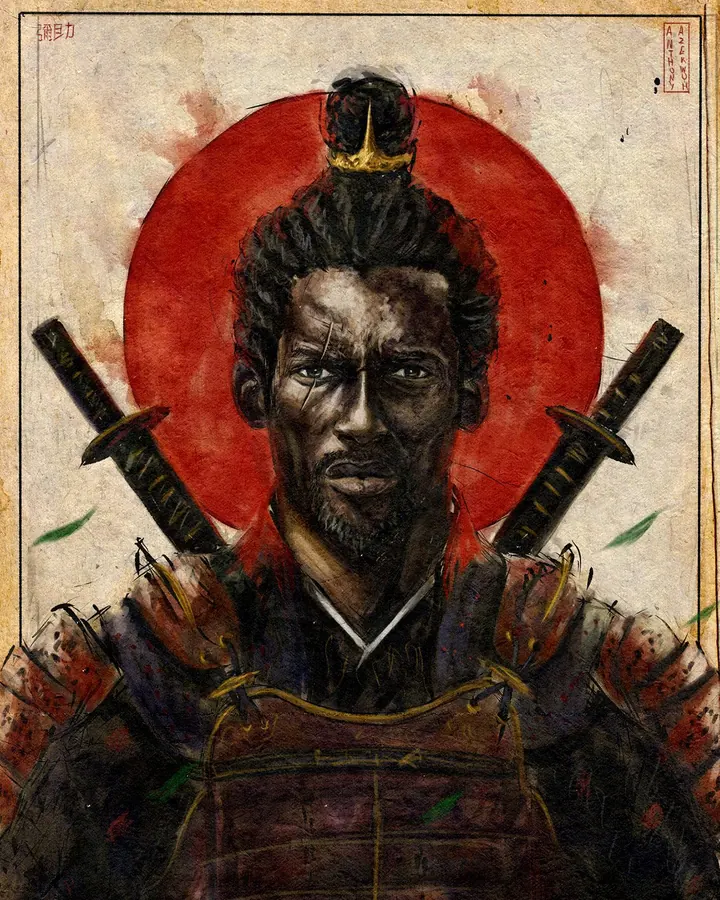
Yasuke
The African who stood beside Japan's most powerful warlord — and whose birthplace no record names.
The rise
He reached Japan from India in the household of the Jesuit visitor Alessandro Valignano, and was presented to Oda Nobunaga in Kyoto in March 1581. The crowd that pressed in to see him threw stones, and people died in the crush.
What they did
Nobunaga put him on a stipend and talked with him at length — he had picked up some Japanese. A samurai's diary that saw him on the Tōkaidō road in May 1582 records his name, his height of about 182 cm, and that the warlord paid him. When Nobunaga fell at Honnō-ji that June, he fought on at the heir's residence, surrendered his sword and was spared.
The full picture
The record is thin and contested: the sword, the house and the name Yasuke come from one manuscript copied in 1719, which is why Japanese historians divide over calling him a samurai at all. Of his origin the Jesuits say only cafre — a Portuguese word that in 1580 meant the south-east African coast — and a single French chronicle of 1627 names Mozambique.
Why it matters
He is the one African in sixteenth-century Japan whose presence the records of two civilisations both confirm — and the figure about whom the most has since been invented. This entry holds to what the sources say.