 KemetLeads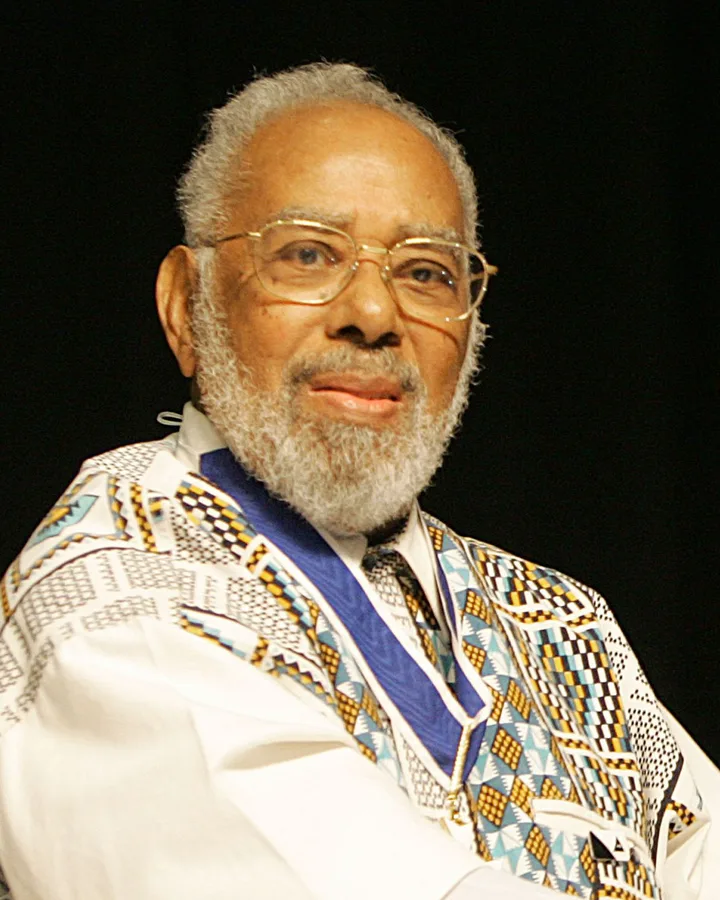
Abdias do Nascimento
He put Black actors in the lead in 1944, then spent sixty years moving the argument into law.
The rise
Born in Franca, São Paulo, on 14 March 1914, he joined the army at fifteen and took an economics degree in Rio in 1938. Touring South America with a poets' brotherhood, he learned theatre at Buenos Aires's Teatro del Pueblo. Jailed on his return, he founded a theatre company with fellow inmates in Carandiru prison.
What they did
He founded Rio's Teatro Experimental do Negro in 1944, giving Black actors lead roles and teaching them to read, and organised the 1945 National Convention of Black Brazilians and the 1950 First Congress. Exiled in 1968, he founded the African cultures chair at SUNY Buffalo. Home again, he was federal deputy for Rio (1983–87) and senator, filing Brazil's first affirmative-action bills.
The full picture
He passed through the fascist Ação Integralista Brasileira in the 1930s, drawn, he wrote in 1978, by its anti-imperialism, and left on finding its racism; he was arrested in 1938 with its leaflets. Both Senate spells, 1991–92 and 1997–99, were served as Darcy Ribeiro's substitute rather than as an elected first-holder.
Why it matters
He carried Black Brazilian demands from the stage to the statute book across six decades, and put racial quotas on the national agenda decades before they passed into law.
“Quilombo does not mean runaway slave. Quilombo means free and fraternal gathering — solidarity, living together, existential communion.”