 KemetLeads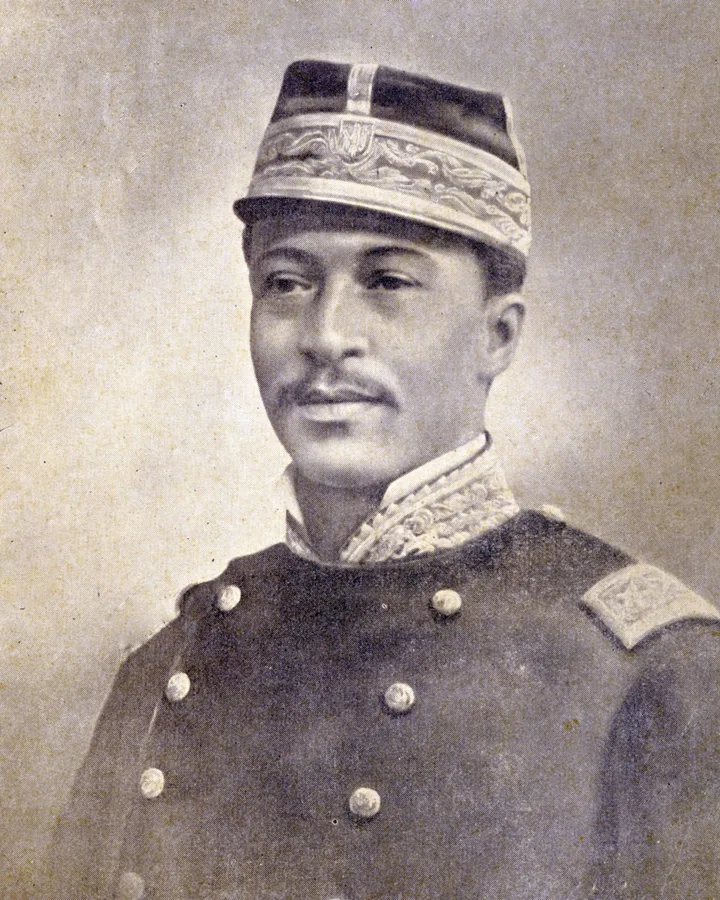
Gregorio Luperón
Twice he stopped his country being handed to a foreign power — the second time, against its own president.
The rise
Born on 8 September 1839 in Puerto Plata to Nicolasa Luperón, a Black woman of small means, and unacknowledged by his father, he worked as a water carrier and in a timber yard, taught himself from a merchant's library and learned English. He took up arms at eighteen in the 1857 rising against Báez.
What they did
After Spain re-annexed Santo Domingo in 1861 he became a commander of the Restoration War, fighting a campaign that made the colony unholdable until Spain withdrew in 1865. He led opposition to Báez's plan to annex the republic to the United States in 1869–71, and as provisional president from October 1879 brought in Eugenio María de Hostos, who founded its first secular normal school.
The full picture
He was a caudillo among caudillos, in and out of insurrection and exile for thirty years. He backed Ulises Heureaux, who turned the Blue Party's victory into a seventeen-year dictatorship and drove Luperón abroad. He came home to Puerto Plata gravely ill in December 1896 and died of cancer on 21 May 1897.
Why it matters
Dominican founding figures are mostly claimed as Hispanic; the one who twice kept the republic from being sold to a foreign power was a poor Black boy from Puerto Plata.
“Men like me should not die lying down.”