 KemetLeads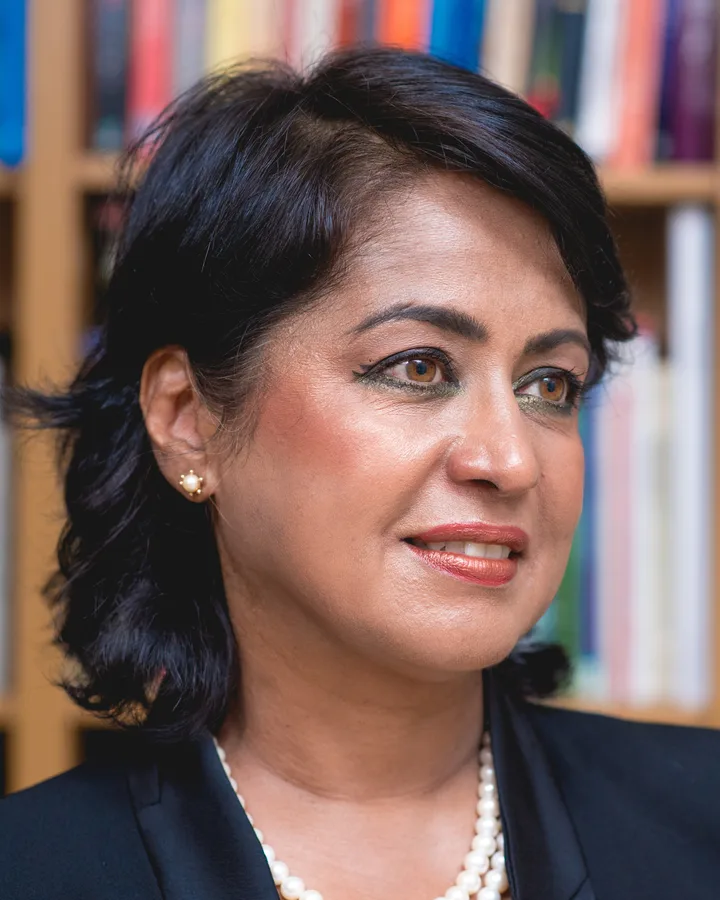
Ameenah Gurib-Fakim
The scientist who catalogued her islands' plants, then took a presidency she could not hold.
The rise
A chemist trained in Britain, Gurib-Fakim spent decades documenting the medicinal and cosmetic properties of Indian Ocean plants, rising to dean and pro-vice-chancellor at the University of Mauritius. In 2007 she won the L'Oréal-UNESCO Award for Women in Science for Africa and the Arab States.
What they did
Her work turned the endemic flora of the Mascarenes — plants found nowhere else on earth — into a documented pharmacopoeia, and made her a leading African voice for biodiversity as an economic asset. In June 2015 the National Assembly elected her President of Mauritius: the country's first woman head of state.
The full picture
She resigned in March 2018 after L'Express reported she had spent some $26,000 unrelated to the charity's work on a credit card given to her by the Planet Earth Institute, a London NGO funded by Angolan businessman Álvaro Sobrinho. She had sat on its board from 2015 to 2017 while head of state. She repaid the sums, denied wrongdoing, and was never convicted.
Why it matters
The collection has few scientists and fewer island voices; she is both. Her case also poses its sharpest question — what happens when a scientist with no political machine is handed a ceremonial presidency and then courted by money that wants her credibility.
“There is no such thing as a weed. It's a plant. It's a living biological lab that may well have answers to the question that we may have, but we have to ensure that it has the right to live.”