 KemetLeads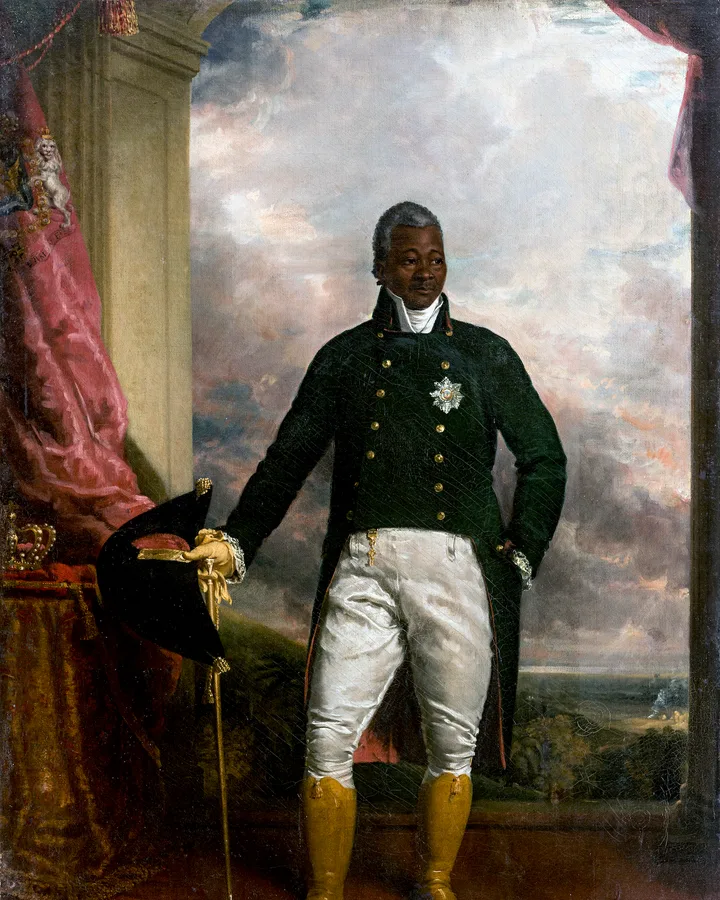
Henri Christophe
He built the fortress, the palace and the schools — and the labour code that made his subjects pay for them.
The rise
Born on 6 October 1767 in the British Caribbean, probably Grenada, he came to Saint-Domingue and was working in Cap-Français when the 1791 uprising began. He rose under Toussaint Louverture, burned Cap-Français rather than hand it to Leclerc in 1802, and took the north for himself after Dessalines was killed in 1806.
What they did
Elected president of the State of Haiti on 17 February 1807, he crowned himself King Henry I in 1811. He raised the Citadelle Laferrière above Milot and the palace of Sans-Souci, promulgated the Code Henry in 1812, and built a school system with English teachers recruited through the abolitionist Thomas Clarkson. The fortress and palace became a UNESCO World Heritage site in 1982.
The full picture
His revenue came from corvée — compulsory plantation labour paid in a quarter share of the crop — which many experienced as slavery renamed. He created a hereditary nobility, ruled by decree and kept Haiti split against Pétion's republic in the south. Paralysed by a stroke and facing revolt, he shot himself on 8 October 1820.
Why it matters
He is the hardest case in Black state-building: proof that a free Black kingdom could build, educate and defend itself, and proof of what such a state could demand of its own people.
“For a long while, my intention, my dearest ambition, has been to secure for the nation which has confided to me its destiny the benefit of public instruction.”