 KemetLeads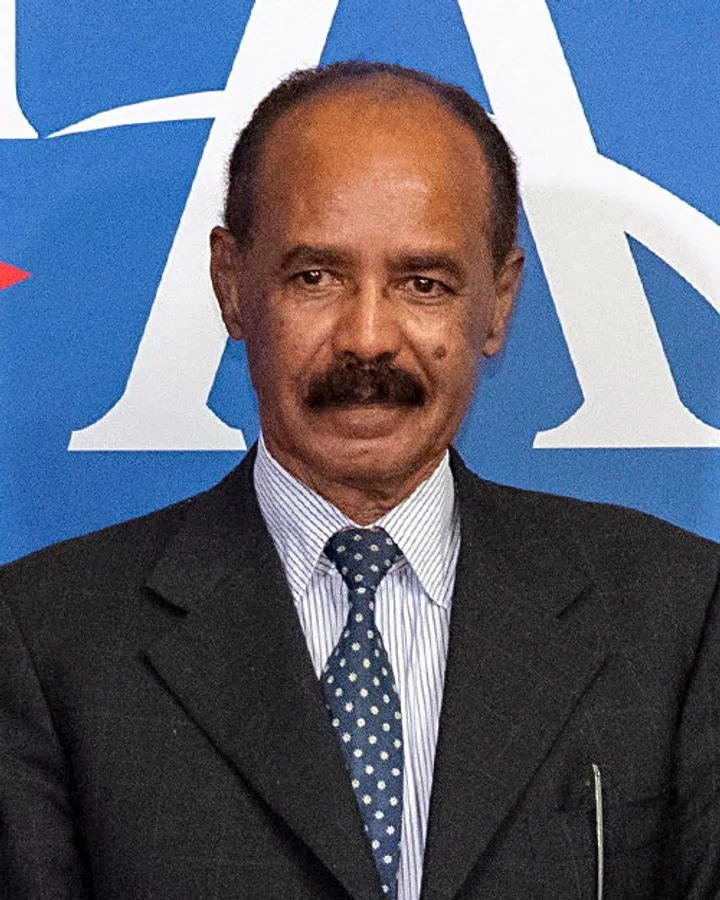
Isaias Afwerki
The guerrilla who won a thirty-year war and then never held an election.
KemetLeads Scorecard
How we score →Liberation leader confirmed by the 1993 independence referendum, but never elected; the 1997 constitution was never implemented and no national election has ever been held; indefinite conscription and mass exodus.
P = percentile among the other African countries over the same years. Rows 1–4 are country-level change during the tenure — evidence, not proof.
Our read
The liberation's leader has never faced a ballot. Health improved faster than the continent (P66) — a state that can vaccinate but not vote. Rule of law at P4 and rights at P10 since 1993 track a constitution never enacted and a conscription that never ends.
Power 1993–
The 1997 constitution was never brought into force; no national election or term limit since 1993.
Sources: Archigos 4.1 (Goemans, Gleditsch & Chiozza) · Powell & Thyne coup data V2026.08.29 · term-limit conduct coded by KemetLeads
The rise
Born in Asmara in 1946, Isaias abandoned engineering studies at Addis Ababa University in 1966 to join the Eritrean Liberation Front, trained in China, and broke away to help found the Eritrean People's Liberation Front. Through purges and battlefield discipline he became its secretary-general in 1987 and led the EPLF into Asmara in May 1991.
What they did
After a UN-supervised referendum in April 1993 delivered 99.8 per cent for independence, he became president of Africa's newest state, admired at first for its self-reliance and low corruption. In July 2018 he signed a peace declaration with Ethiopia's Abiy Ahmed that ended twenty years of frozen war, and Eritrean troops then joined Ethiopia's war in Tigray.
The full picture
The 1997 constitution was never implemented and no national election has been held; in 2001 he jailed his own ministers and closed every independent newspaper, and many of those detainees have never been seen again. Indefinite national service drives hundreds of thousands into exile, and a UN commission of inquiry has found reasonable grounds to believe crimes against humanity have been committed.
Why it matters
Isaias is the archetype of the liberation hero turned jailer, and Eritrea the test case for what happens when a nation is run as a barracks. His alliances across the Red Sea still shape the Horn, and the Eritrean diaspora carries both his flag and the memory of his prisons.
“We will wait about three or four decades until we see genuine, natural situations emerge. Maybe more, maybe more — who knows.”