 KemetLeads
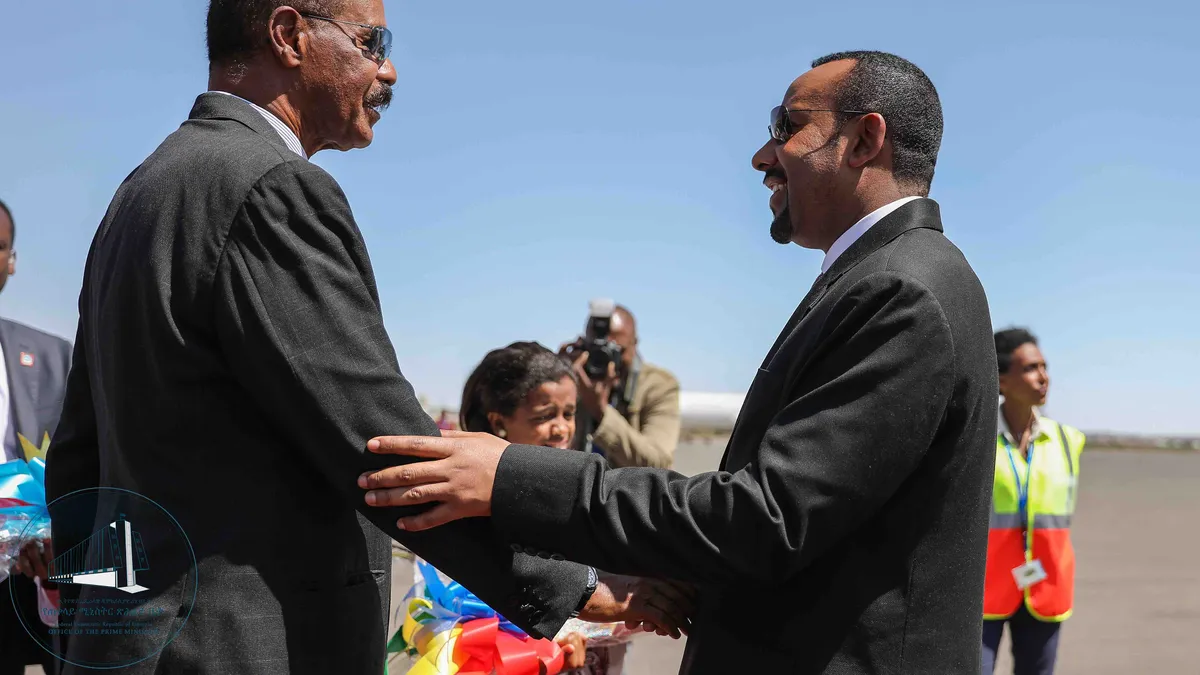
Ethiopia and Eritrea cut ties — the Nobel peace was signed by two men, not two states
Ethiopia and Eritrea cut ties — the Nobel peace was signed by two men, not two states
Ethiopia's foreign ministry declared ten Eritrean diplomats in Addis Ababa persona non grata on 1 October, gave them 48 hours to leave and announced the closure of its embassy in Asmara, citing “direct and indirect acts of hostility and belligerence” (Addis Insight, 1 October); the same day Eritrea's foreign ministry severed “all diplomatic ties”, saying Ethiopia had pursued for three years “a publicly pronounced declaration of war” over sovereign access to the sea (Ministry of Foreign Affairs, Asmara, 1 October). The two governments had restored relations in declarations Abiy Ahmed and Isaias Afwerki signed in Asmara and Jeddah in July and September 2018, which the Norwegian Nobel Committee cited when it awarded Abiy the 2019 Peace Prize (Nobel Committee, 11 October 2019).
The Norwegian Nobel Committee gave Abiy Ahmed the 2019 Peace Prize “in particular” for ending the border conflict with Eritrea, and wrote that when he reached out his hand, Isaias Afwerki grasped it — a fair description of a peace that lived in two men's hands. Our Power block shows why that was the weakness rather than the merit: as we noted on 29 September, they are the only two of the 15 sitting leaders we grade who govern under no term limit at all, and our Scorecard puts Isaias's Eritrea, over 1993–2025, at the 4th percentile of African countries on rule of law and control of corruption — level with Burkina Faso's junta at the bottom of our sitting roster — and at P10 on rights. The 2002 boundary ruling whose acceptance the Committee called the premise of the breakthrough was never marked on the ground, so the 2018 declarations had no institution to outlast a quarrel: the two governments fought the Tigray war of 2020–22 on the same side, and drifted apart after the Pretoria Agreement was signed without Asmara. Each now accuses the other of arming its rebels — Addis Ababa says Eritrea backs the alliance fighting in Tigray, Afar and Amhara, Asmara says Ethiopia trains Eritrean armed opposition groups for regime change — and neither charge has been independently verified. We said on 26 September that growth did not buy the Pretoria peace; this week showed that the 2018 peace was never built, only held, and the real test is whether Abiy's first address to the new parliament after 5 October offers Mekelle and Asmara alike a way back to the table before the Nobel's seventh anniversary, on 11 October, falls with both his peace agreements broken.
Abiy's first address to the House of Peoples' Representatives after it opens on 5 October, and whether either capital reopens an embassy before the Pretoria Agreement's fourth anniversary on 2 November.
SourcesMinistry of Foreign Affairs of Eritrea, press release via Shabait, 1 Oct · Addis Insight on Ethiopia's foreign ministry statement, 1 Oct · Norwegian Nobel Committee, 2019 Peace Prize announcement, 11 Oct 2019
More from the Brief
 Burkina opens a 164-tonne gold refinery — in a country that mines 94
Captain Ibrahim Traoré inaugurated RAFFINOR-BF, Burkina Faso's first gold refinery, in Ouagadougou on 28 September: it cost more than 11 billion CFA francs, financed mainly by the state through the National Company of Precious Substances (SONASP) with private partners, and can refine 164 tonnes a year, rising to 515 tonnes in a second phase (Sidwaya, 28 September). The country produced 94 tonnes of gold in 2025, 43 of them from artisanal and semi-mechanised mining, Prime Minister Jean-Emmanuel Ouédraogo told the Transitional Legislative Assembly on 30 January (Mines Actu, 30 January).
3 sources
Burkina opens a 164-tonne gold refinery — in a country that mines 94
Captain Ibrahim Traoré inaugurated RAFFINOR-BF, Burkina Faso's first gold refinery, in Ouagadougou on 28 September: it cost more than 11 billion CFA francs, financed mainly by the state through the National Company of Precious Substances (SONASP) with private partners, and can refine 164 tonnes a year, rising to 515 tonnes in a second phase (Sidwaya, 28 September). The country produced 94 tonnes of gold in 2025, 43 of them from artisanal and semi-mechanised mining, Prime Minister Jean-Emmanuel Ouédraogo told the Transitional Legislative Assembly on 30 January (Mines Actu, 30 January).
3 sources
 Ethiopia seats its new parliament on 5 October — with Tigray's 38 seats empty
Ethiopia's newly elected House of Peoples' Representatives opens on 5 October, when the government for a new five-year term will be constituted, Speaker Tagesse Chafo announced (Fana, 23 September); the National Election Board gave the Prosperity Party 438 of the 486 seats declared from the 1 June election, while 38 constituencies in Tigray and eight in Amhara did not vote (The Reporter, 21 June). Earlier in the week the Security Council holds its fourth straw poll for UN Secretary-General on 29 September, with Senegal's Macky Sall and Uganda's Olara Otunnu the only African candidates (United Nations), and Botswana turns 60 on 30 September, Lesotho on 4 October.
3 sources
Ethiopia seats its new parliament on 5 October — with Tigray's 38 seats empty
Ethiopia's newly elected House of Peoples' Representatives opens on 5 October, when the government for a new five-year term will be constituted, Speaker Tagesse Chafo announced (Fana, 23 September); the National Election Board gave the Prosperity Party 438 of the 486 seats declared from the 1 June election, while 38 constituencies in Tigray and eight in Amhara did not vote (The Reporter, 21 June). Earlier in the week the Security Council holds its fourth straw poll for UN Secretary-General on 29 September, with Senegal's Macky Sall and Uganda's Olara Otunnu the only African candidates (United Nations), and Botswana turns 60 on 30 September, Lesotho on 4 October.
3 sources
 Botswana turns 60 in a diamond slump — Khama's rarest number was never the mine
Botswana marks 60 years of independence on 30 September with its economy shrinking: the Ministry of Finance estimates GDP fell 2.8% in 2024 and 0.4% in 2025, and mineral revenue for 2025/26 was revised down 23.4% to P12 billion on weak diamond sales (Bank of Botswana, Monetary Policy Statement, February 2026). Government debt is projected at 38.8% of GDP by the end of 2025/26 and 44.7% by the end of 2026/27, above the 40% statutory limit — two years after voters, on 30 October 2024, removed the Botswana Democratic Party that had governed since 1966 (Al Jazeera, 1 November 2024).
3 sources
Botswana turns 60 in a diamond slump — Khama's rarest number was never the mine
Botswana marks 60 years of independence on 30 September with its economy shrinking: the Ministry of Finance estimates GDP fell 2.8% in 2024 and 0.4% in 2025, and mineral revenue for 2025/26 was revised down 23.4% to P12 billion on weak diamond sales (Bank of Botswana, Monetary Policy Statement, February 2026). Government debt is projected at 38.8% of GDP by the end of 2025/26 and 44.7% by the end of 2026/27, above the 40% statutory limit — two years after voters, on 30 October 2024, removed the Botswana Democratic Party that had governed since 1966 (Al Jazeera, 1 November 2024).
3 sources