 KemetLeads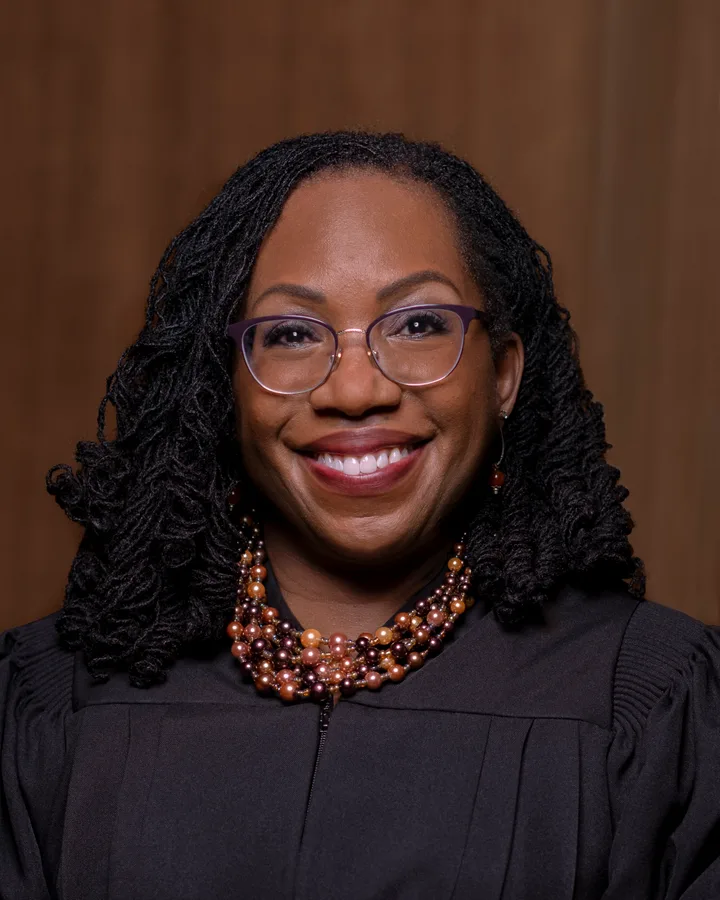
Ketanji Brown Jackson
She spent years defending people the government had charged, then judged the government itself.
The rise
Born in Washington on 14 September 1970 and raised in Miami, she took two Harvard degrees, clerked for Justice Breyer, and served as a federal public defender from 2005 to 2007 — then as vice-chair of the US Sentencing Commission, making crack-cocaine sentence cuts retroactive.
What they did
A federal district judge in Washington from 2013 and on the D.C. Circuit from 2021, she was confirmed 53–47 on 7 April 2022 and sworn in on 30 June — the first Black woman, and the first former public defender, to sit on the Court. Her 2023 affirmative-action dissent is now the standard text of the opposing case; her memoir 'Lovely One' followed in 2024.
The full picture
She sits three against six: her weight is in dissent, not outcome, and she increasingly writes alone. On 25 August 2026 she filed a 23-page solo dissent against clearing Trump's mail-voting order rather than join Sotomayor and Kagan. Conservative critics call the style unjudicial; her 2022 hearings were bitter.
Why it matters
Her path broke a professional pattern as much as a racial one — the Court had never seated anyone who had spent years defending the accused — and her dissents are read as the case the majority has to answer.
“But deeming race irrelevant in law does not make it so in life.”