 KemetLeads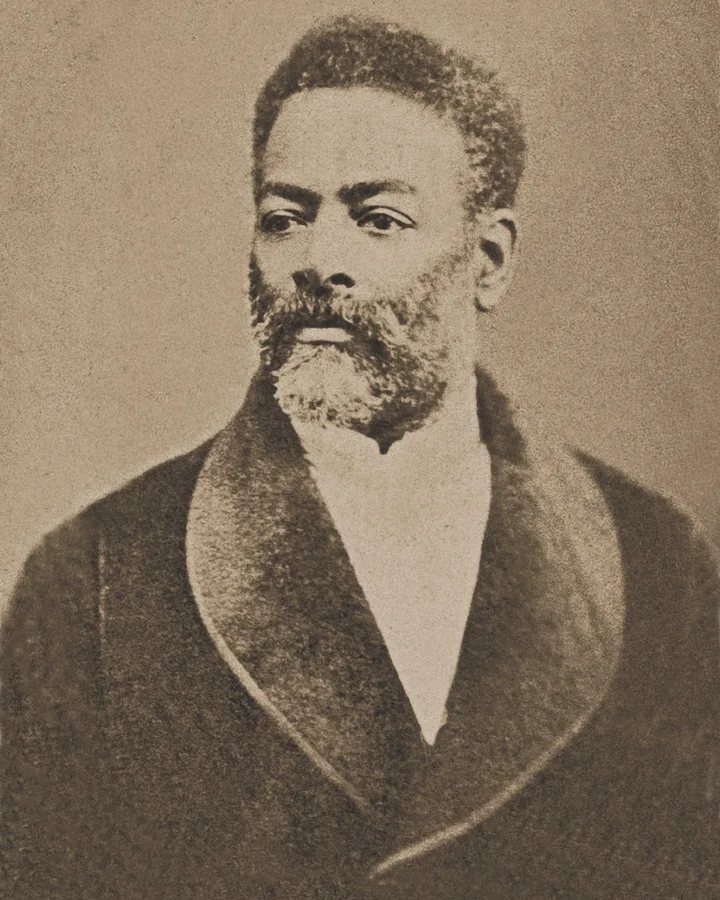
Luiz Gama
Born free, sold into slavery by his own father, he turned Brazil's own law back on the slaveholders.
The rise
Born in Salvador on 21 June 1830 to Luíza Mahin, a free African woman of the Costa da Mina, and a Portuguese gentleman whose name he would not print. At ten his father, ruined by gambling, sold him aboard the patacho Saraiva. A law student taught him his letters at seventeen; a year later he found proof of his freedom and fled.
What they did
Barred from law school, he worked as a rábula — an advocate licensed without a degree — arguing that anyone trafficked into Brazil after the 1831 Feijó law was free by right. In the 1869 Questão Netto he won freedom for 217 people at once, and by his own 1880 account had pulled over 500 out of captivity. His Primeiras Trovas Burlescas (1859) mocked whites who hid African ancestry.
The full picture
The figure of 500 is his own estimate in a letter, not a court tally. His most-quoted line — that a slave who kills his master always kills in self-defence — is rejected as never verifiably his by Lígia Fonseca Ferreira, his editor. Even his birth year is contested: 1830 in his own account, 1831 on a baptismal record in Bahia.
Why it matters
He showed that the master's own legal code could be turned into a weapon of emancipation, and trained a generation of São Paulo abolitionist lawyers and journalists before dying at fifty-one.
“My father — I do not dare affirm that he was white, because such affirmations, in this country, put the truth in grave danger.”