 KemetLeads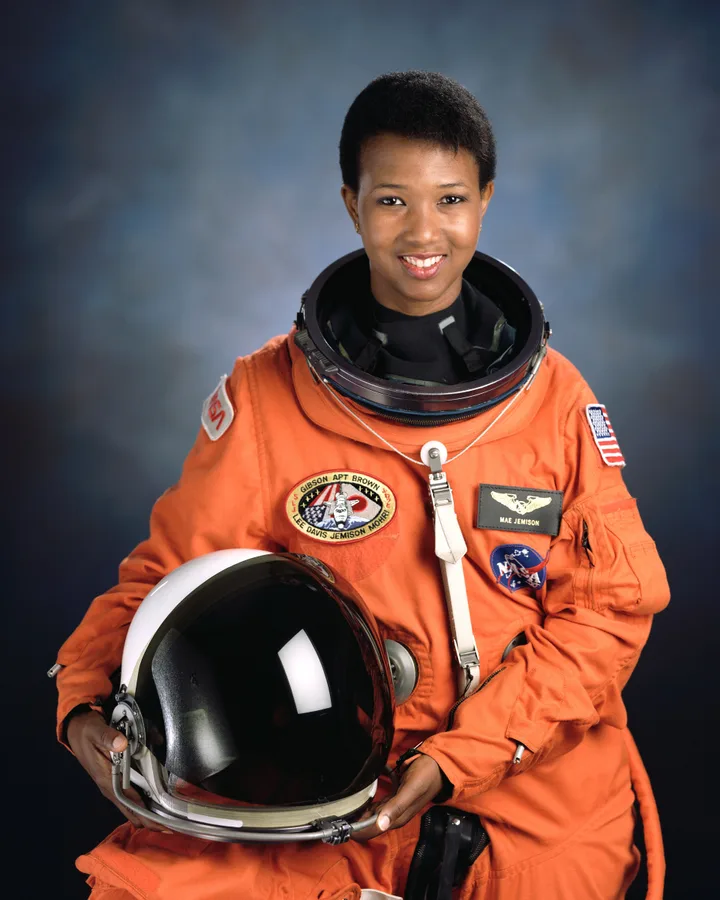
Mae Jemison
Eight days in orbit, one flight, then out — she spent the rest on who else gets to do science.
The rise
Born on 17 October 1956 in Decatur, Alabama and raised in Chicago, she entered Stanford at sixteen and left with degrees in chemical engineering and in African and African-American studies, took her MD at Cornell in 1981, then served as a Peace Corps medical officer in Sierra Leone and Liberia from 1983 to 1985.
What they did
NASA took her into astronaut group 12 in 1987. On 12 September 1992 she launched aboard Endeavour on STS-47, the first Black woman in space, and spent eight days running Spacelab-J's life-science work — bone cell loss, fluid replacement, frog eggs fertilised in weightlessness — across 127 orbits. She resigned in March 1993, after one flight.
The full picture
She left six months after flying and built the Jemison Group, The Earth We Share science camp in 1994 and, on a $500,000 DARPA seed in 2012, the 100 Year Starship, whose symposia ran from 2011 to 2015 and then not again until 2023. She sued Nassau Bay police in 1996 over a violent arrest; the officer was suspended and cleared.
Why it matters
Leaving after a single mission is the point: she converted eight days of altitude into thirty years of arguing that science belongs to children nobody ever told it was theirs.
“I felt like I had a right to be anywhere in this universe, that I belonged here as much as any speck of stardust, any comet, any planet.”