 KemetLeads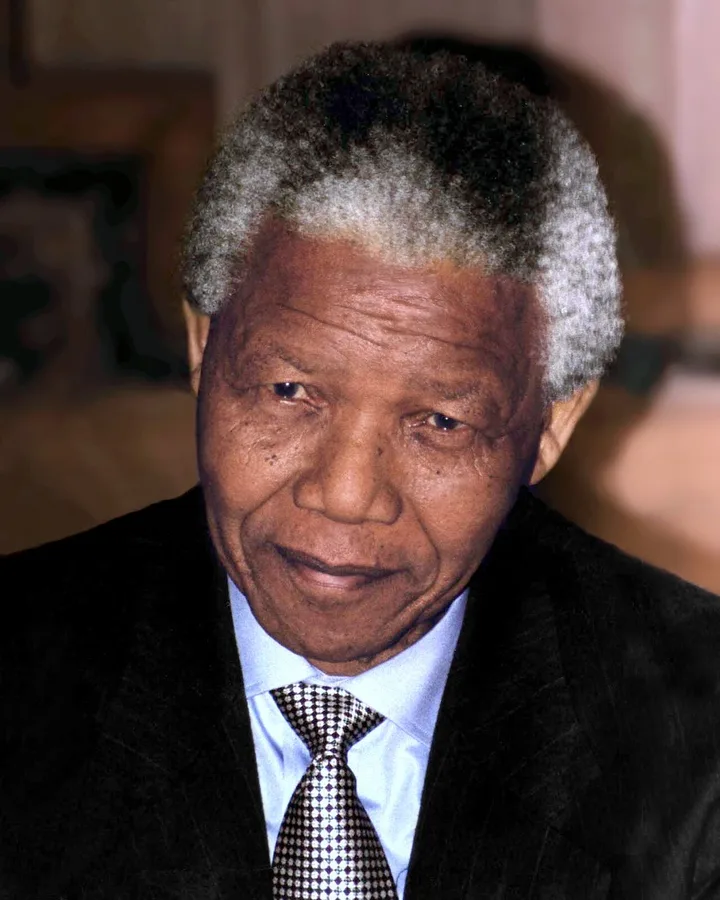
Nelson Mandela
The man who chose reconciliation over revenge — and redefined leadership after suffering.
KemetLeads Scorecard
How we score →Elected in 1994, honoured the constitution and stepped down after a single term.
P = percentile among the other African countries over the same years. Rows 1–4 are country-level change during the tenure — evidence, not proof.
Our read
The numbers behind the legend hold up: in five years, South Africa's democracy score rose by a third of the entire scale, and he left on schedule. What the scorecard cannot show is the price he paid to keep the transition peaceful.
Power 1994–1999
★ Ibrahim Prize, honoraryTwo-term limit in the 1996 constitution; served one term and left in 1999.
Sources: Archigos 4.1 (Goemans, Gleditsch & Chiozza) · Powell & Thyne coup data V2026.08.29 · term-limit conduct coded by KemetLeads
The rise
A lawyer and ANC activist, Mandela helped lead the armed and political struggle against apartheid. Convicted at the Rivonia Trial, he spent 27 years in prison, most on Robben Island, becoming the world's most famous political prisoner.
What they did
Released in 1990, he negotiated the end of apartheid with F.W. de Klerk — the two shared the 1993 Nobel Peace Prize. As president he steered South Africa through a peaceful transition and established the Truth and Reconciliation Commission.
The full picture
Critics note that political freedom outpaced economic transformation; deep inequality persisted long after 1994. Mandela himself acknowledged the unfinished work of economic justice.
Why it matters
He proved a leader can hold both moral authority and political pragmatism — and that letting go of power (he served one term by choice) is itself an act of leadership.
“It always seems impossible until it's done.”