 KemetLeads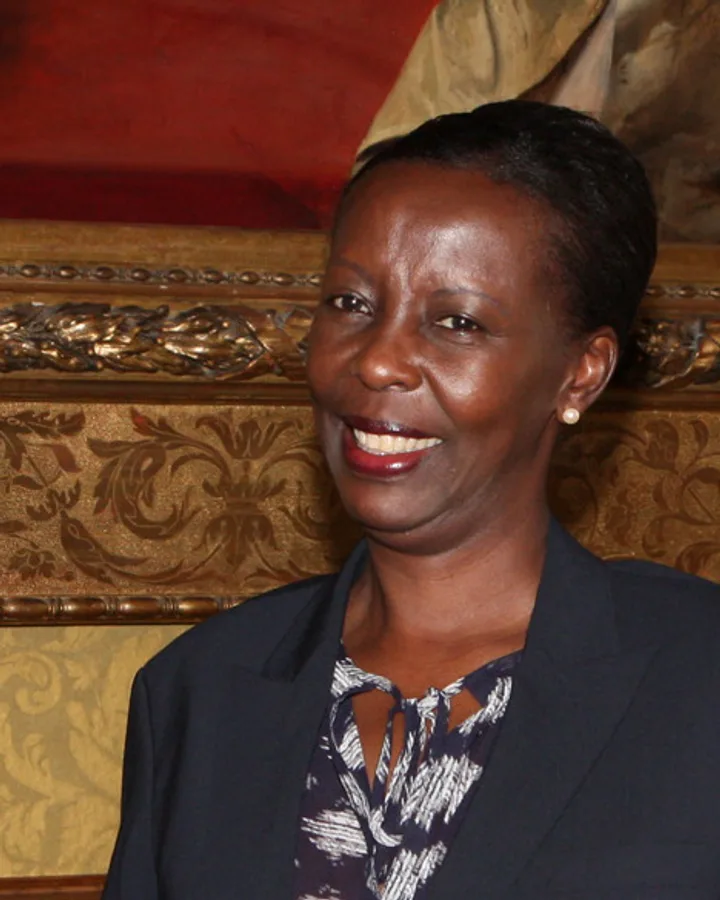
Louise Mushikiwabo
She runs French-speaking diplomacy for a country that teaches its own children in English.
The rise
Born on 22 May 1961 in Kigali, she left for the United States and worked there for years as a translator and interpreter. Her brother Landouald Ndasingwa, a Tutsi opposition politician, was killed with his Canadian wife on the first day of the 1994 genocide; she wrote about him in 'Rwanda Means the Universe' in 2006.
What they did
Information minister in 2008, she became foreign minister in 2009 and held the post until 2018, the longest tenure since the genocide. Backed by Kigali and by Emmanuel Macron, she was elected Secretary-General of the Organisation internationale de la Francophonie at the Yerevan summit in October 2018, took office in January 2019 and was re-elected at Djerba in November 2022.
The full picture
Human-rights organisations opposed her election as legitimising Rwanda's record on political freedom, and the OIF has stayed quiet on that record and on Kigali's role in eastern DRC. She is one of four candidates for the 2027-2030 term, settled at Phnom Penh on 16 November 2026; another is Juliana Lumumba of the DRC.
Why it matters
She took a French-speaking institution as the minister of a country that had just switched its schools to English, and turned the paradox into a claim that French is African property rather than French property.
“Francophonie is not Françafrique, and Francophonie is not France.”