 KemetLeads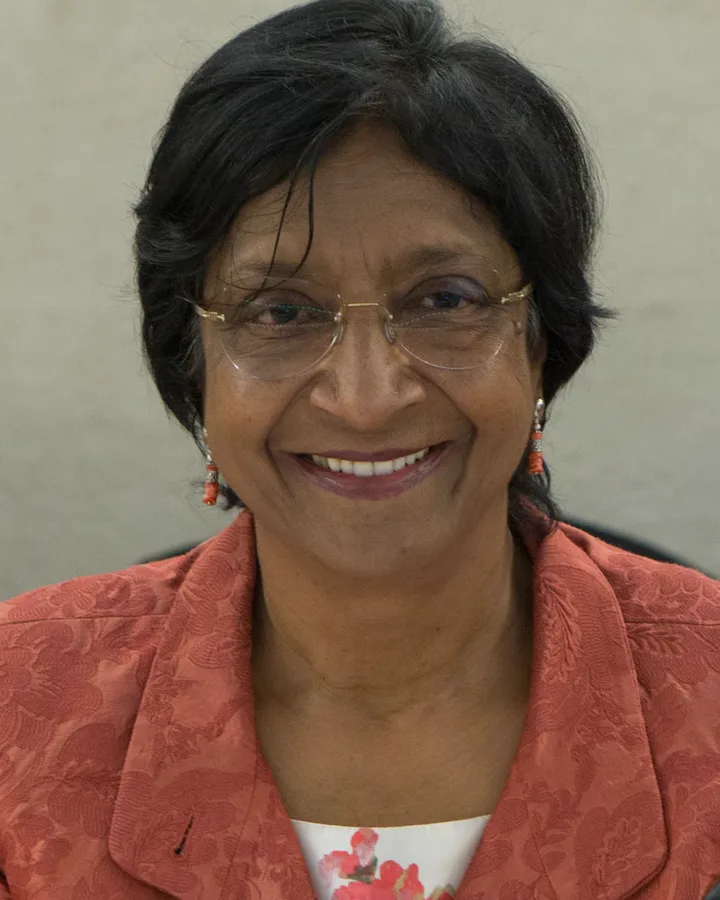
Navi Pillay
Apartheid kept her out of a judge's chambers; she ended up writing the law on rape as a weapon of war.
The rise
Born Navanethem Naidoo in Durban on 23 September 1941, a bus driver's daughter, she took her law degree at Natal in 1965, but no firm would article a Black woman. In 1967 she opened her own practice, the first Black woman in Natal to do so, and won Robben Island prisoners access to lawyers. Harvard gave her a doctorate in 1988.
What they did
In 1995 Mandela put her on the High Court, the first non-white woman on it, and the UN elected her to the Rwanda tribunal. She sat on the Akayesu bench whose 1998 judgment first held rape an act of genocide, presided over the tribunal from 1999 to 2003, then sat in the ICC's appeals chamber (2003–2008). From 2008 to 2014 she was UN High Commissioner for Human Rights.
The full picture
Colombo accused her of bias over Sri Lanka in 2013; others said she moved too slowly on Sri Lanka and Syria. From 2021 she chaired the UN inquiry on the Occupied Palestinian Territory and Israel, which Israel and the United States called partisan; she rejected the charge and in July 2025 resigned, citing age and health.
Why it matters
A woman apartheid kept out of the profession sat on the bench that made rape a crime of genocide — the largest single advance in prosecuting sexual violence in war.
“Rape had always been regarded as one of the spoils of war. Now it is a war crime, no longer a trophy.”