 KemetLeads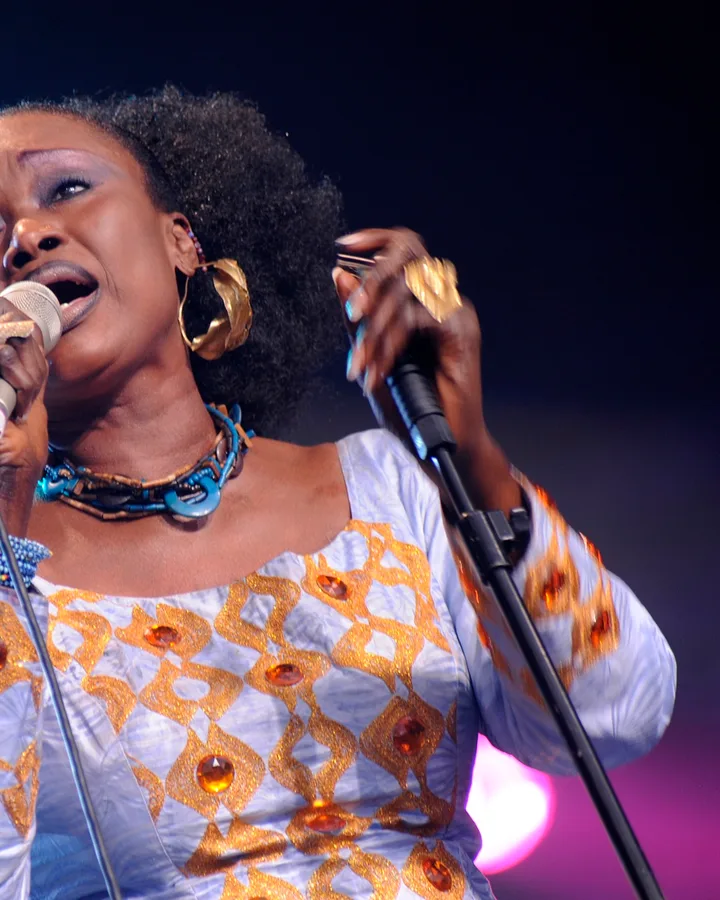
Oumou Sangaré
She watched her mother pay for a second wife, then sang about it to audiences that practised it.
The rise
Born in Bamako on 25 February 1968 to the singer Aminata Diakité, left with nothing when her father went to Abidjan, she sang in the streets as a child to help feed the family and won a city schools contest at five. At sixteen she toured Europe with the Djoliba percussion group before forming a band of her own.
What they did
Moussolou — 'Women' — appeared in 1989 and sold over 200,000 copies in West Africa, carrying songs against forced marriage, child marriage and polygamy into households that practised all three. She kept her rights and her earnings, built the thirty-room Hôtel Wassoulou in Bamako, became an FAO goodwill ambassador in 2003, shared a Grammy in 2011 and took the Rolf Schock Prize in 2024.
The full picture
Her position is narrower than the label on it: she says she respects a woman who chooses polygamy, and objects to a girl handed to a man of seventy because he is rich. Conservative religious voices in Mali have attacked her for raising the subject at all. Her businesses have had mixed results, and touring has cost her at home.
Why it matters
She turned Malian song into an argument women could carry into their own compounds, and refused to let the money leave with a record label — artistic authority and economic independence in one career.
“I speak in the place of women who have no chance to speak. If that is what being a feminist is, then yes, I am a feminist.”