 KemetLeads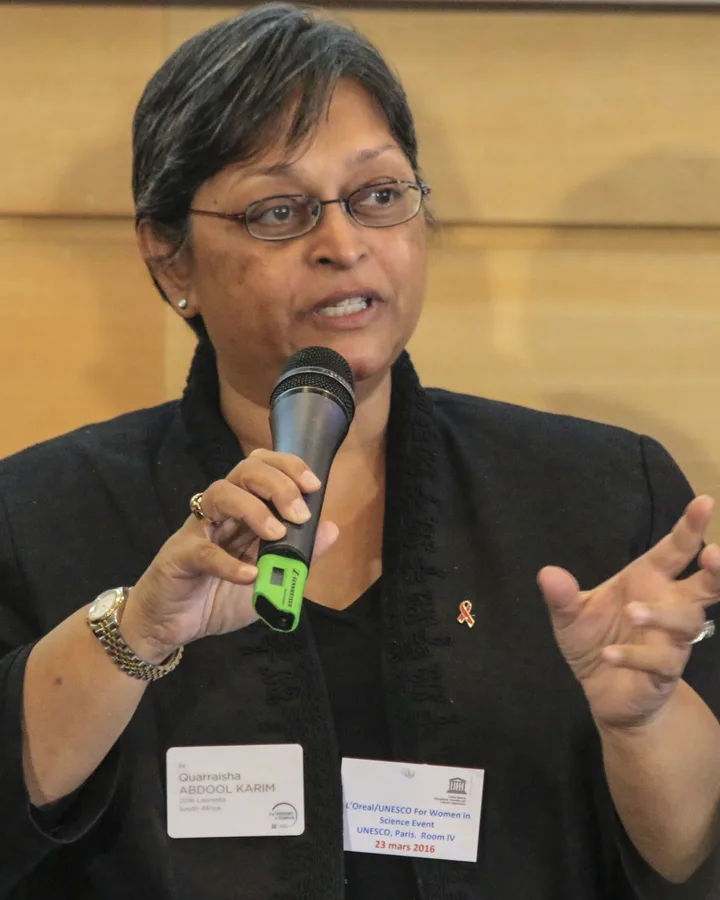
Quarraisha Abdool Karim
She saw who was being infected, then proved a woman could stop it without asking anyone's permission.
The rise
Born on 20 March 1960 in Tongaat, north of Durban, she read science at Durban-Westville and Witwatersrand, took a master's in parasitology at Columbia and a doctorate in medicine at Natal. Her first national survey, in 1992, found HIV almost absent in teenage boys and peaking in girls the same age.
What they did
The gap meant the virus was coming from men a decade older, and condom-based prevention asked a girl to negotiate with the man infecting her. At CAPRISA, which she co-founded, the 004 trial gave women a tenofovir gel they applied themselves: HIV infections fell 39 per cent, genital herpes 51 per cent. Reported in July 2010, it was the first proof antiretrovirals block transmission.
The full picture
The gel never reached the market: the larger VOICE trial found no effect, too few women having used it, and the product was dropped — a reversal she has discussed publicly. CAPRISA, where her husband Salim Abdool Karim is director and she is associate scientific director, runs largely on American and European research funding.
Why it matters
The world's HIV programmes organise around adolescent girls because she counted them first — and because she refused a prevention method that required a woman to persuade the person infecting her.
“Our contributions to HIV pre-exposure prophylaxis were one small but important step in the larger social challenge of gender-power dynamics.”