 KemetLeads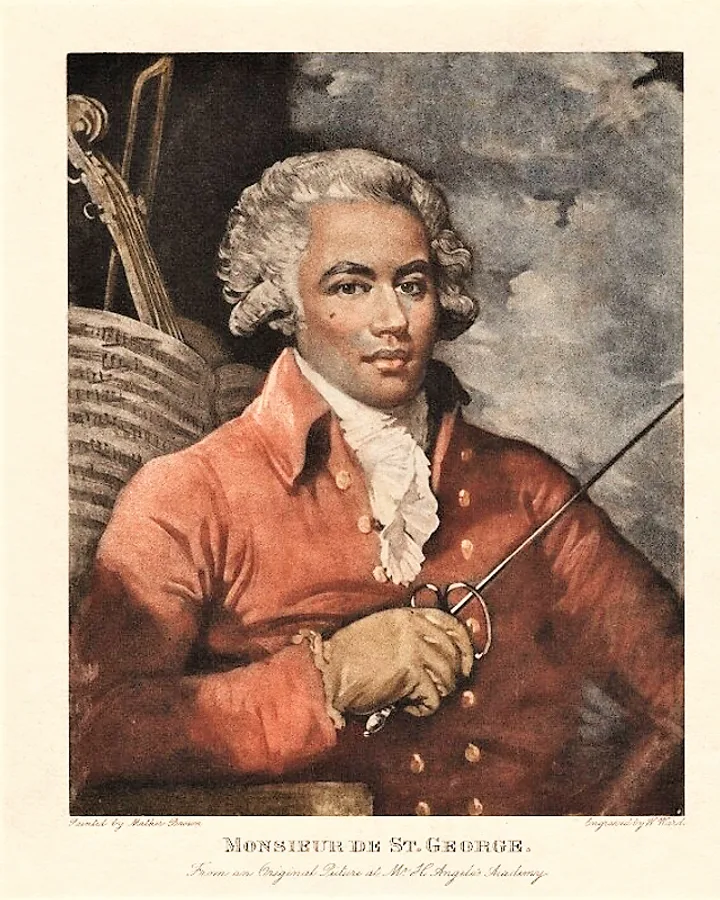
Joseph Bologne, Chevalier de Saint-Georges
Reputed the finest blade in France, and the colonel who raised its first corps of men of colour.
The rise
Born at Baillif in Guadeloupe on 25 December 1745 to Nanon, an enslaved woman, and the planter Georges Bologne, who acknowledged him and took him to France, he boarded at thirteen with the fencing master La Boëssière and was beating the strongest blades by fifteen. He learned the violin alongside, close to the composer Gossec.
What they did
He led the Concert des Amateurs and then the Loge Olympique, which commissioned Haydn's six Paris symphonies, and wrote string quartets, violin concertos and operas. Put forward to run the Paris Opéra in 1776, he was blocked when its star singers told the queen they would never take orders from a mulatto. A decree of 6 December 1792 made him colonel of the Légion franche des Américains.
The full picture
He served a court financed by the slave colonies and took no public abolitionist stand before 1789. Only the legion's first company was wholly men of colour. Jailed from September 1793 until after Thermidor, he never got another command. D'Éon beat him in their 1787 London bout, and the Black Mozart tag is posthumous.
Why it matters
He held the two arenas the ancien regime guarded most jealously, the sword and the concert hall, then raised and commanded armed men of colour for the Republic — and was rediscovered twice over.