 KemetLeads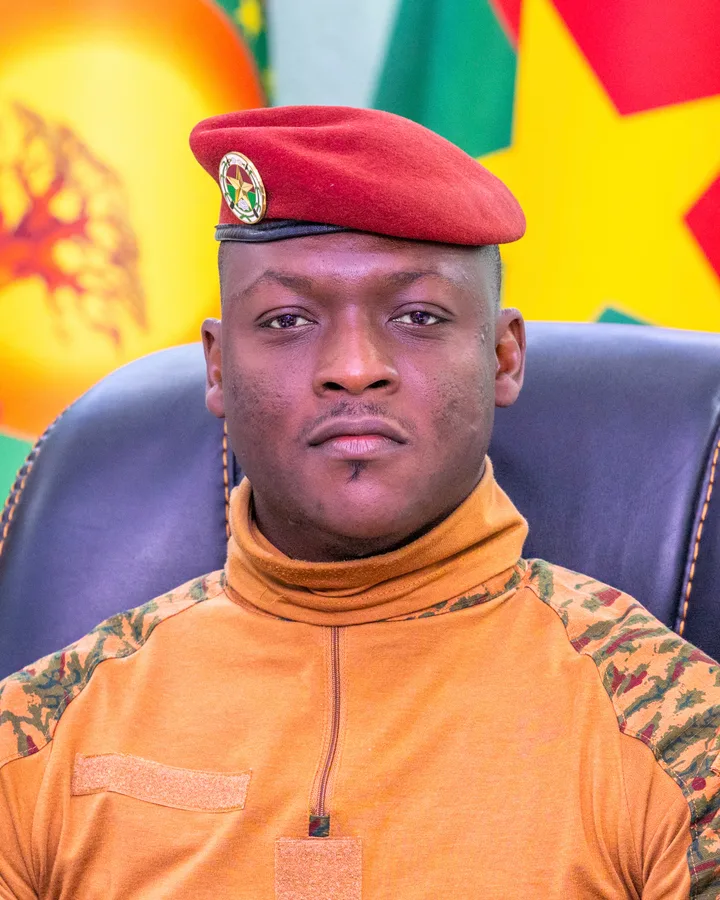
Ibrahim Traoré
The 34-year-old captain who seized a state under siege and became the loudest voice of a new Sahel, with the record still being written.
KemetLeads Scorecard
How we score →Seized power in a 2022 coup; extended the transition to 2029, dissolved the electoral commission and political parties in 2025–26; a sovereignty drive with real support, but insecurity and abuses persist.
P = percentile among the other African countries over the same years. Rows 1–4 are country-level change during the tenure — evidence, not proof.
Our read
Three years in, every measurable row is falling — democracy P2, rule of law P4, rights P13 — and the transition has been pushed to 2029. The sovereignty case has real support; the numbers so far are those of a junta, not a project.
Power 2022–
The 2024 national conference extended the transition by five years, postponing elections to 2029.
Sources: Archigos 4.1 (Goemans, Gleditsch & Chiozza) · Powell & Thyne coup data V2026.08.29 · term-limit conduct coded by KemetLeads
The rise
Born in Kéra in 1988, Traoré studied geology in Ouagadougou before joining the army in 2010, serving in Mali with UN peacekeepers and in artillery units on the jihadist front. On 30 September 2022 he led junior officers in ousting Lieutenant-Colonel Damiba, who had himself taken power eight months earlier.
What they did
He expelled French forces in February 2023, pulled Burkina Faso out of ECOWAS with Mali and Niger, co-founded the Alliance of Sahel States in 2024, nationalised gold mines and opened the country's first refinery, and became a pan-African icon among the young through speeches such as his 2023 St Petersburg address.
The full picture
Jihadist violence has not receded: armed groups still control much of the territory, and the army and VDP militias were credited with over 1,000 civilian deaths in the first half of 2024 alone, including the Nondin, Soro and Barsalogho massacres. He has banned French media, conscripted journalists, dissolved all political parties in January 2026 and extended his mandate to 2029, telling Burkinabè to 'forget about democracy'.
Why it matters
Traoré matters because he is the test case: whether sovereignty rhetoric and military rule can deliver security and dignity, or whether Burkina Faso is repeating a cycle it has known since Sankara.
“Our predecessors taught us one thing: the slave who is not capable of assuming his own revolt does not deserve to be pitied.”