 KemetLeads
Burkina opens a 164-tonne gold refinery — in a country that mines 94
Burkina opens a 164-tonne gold refinery — in a country that mines 94
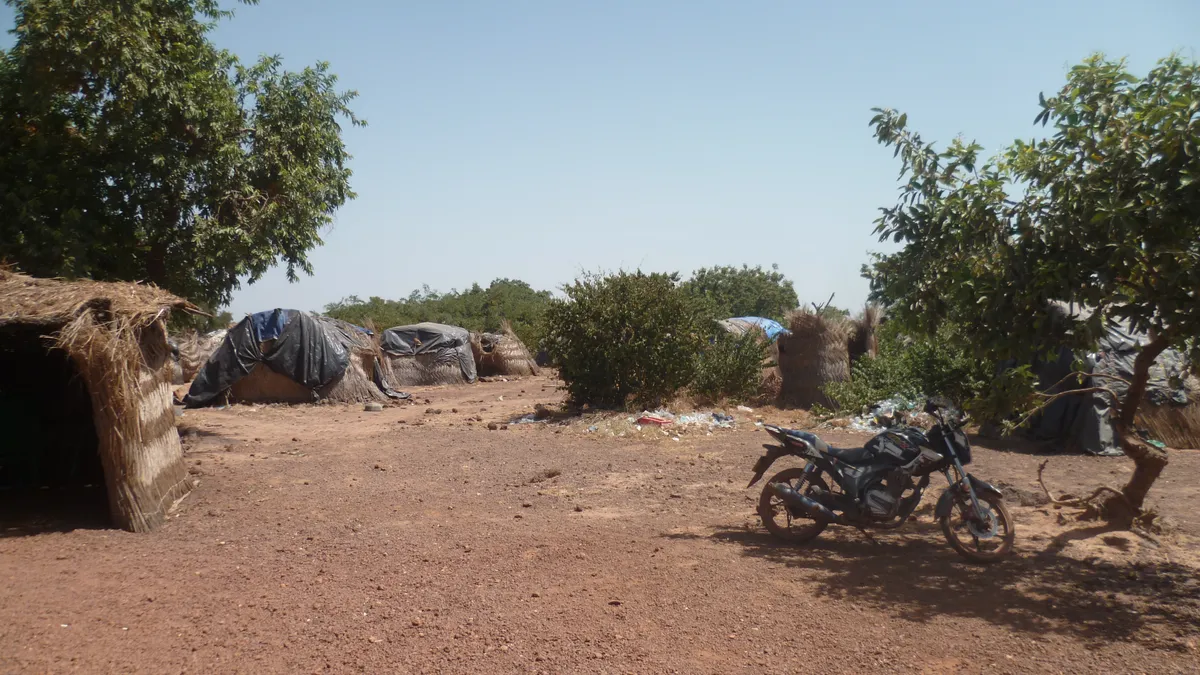
Captain Ibrahim Traoré inaugurated RAFFINOR-BF, Burkina Faso's first gold refinery, in Ouagadougou on 28 September: it cost more than 11 billion CFA francs, financed mainly by the state through the National Company of Precious Substances (SONASP) with private partners, and can refine 164 tonnes a year, rising to 515 tonnes in a second phase (Sidwaya, 28 September). The country produced 94 tonnes of gold in 2025, 43 of them from artisanal and semi-mechanised mining, Prime Minister Jean-Emmanuel Ouédraogo told the Transitional Legislative Assembly on 30 January (Mines Actu, 30 January).
Mines minister Yacouba Zabré Gouba sold the refinery on traceability and on the fight against illicit gold flows, and that is the row where our Scorecard is hardest on Burkina Faso: over 2022–2025 its rule of law and control of corruption fell further than in almost every other African country, the 4th percentile of 53, beside electoral democracy at P2 and rights at P13. The plant is the most concrete thing Ibrahim Traoré's sovereignty programme has built, and its size is its argument — 164 tonnes of capacity against a national output of 94, and 515 planned, cannot be filled from Burkina's own mines, which makes it a bet on gold from beyond them, most plausibly from its partners in the Alliance of Sahel States. It opened two days before the fourth anniversary of the coup of 30 September 2022, and our Power block records what those four years did to the exit: the transition extended to 2029, and every political party dissolved in January 2026. We said in August that the Sahel's sovereignty infrastructure was going up faster than its accountability infrastructure; RAFFINOR-BF is the first piece of the former that cannot work without the latter. The real test is whether RAFFINOR-BF publishes what it refines, from which mines and for which buyers — the one ledger a government that has dissolved its parties and banned French media will have to open.
The Prime Minister's next state-of-the-nation address to the Transitional Legislative Assembly, due around January 2027, and whether it reports how many tonnes RAFFINOR-BF actually refined in its first months.
SourcesPrésidence du Faso on the inauguration of RAFFINOR-BF, 28 Sep · Sidwaya (state daily), Ouagadougou, 28 Sep · Mines Actu on the Prime Minister's state-of-the-nation address, 30 Jan
More from the Brief
 Ethiopia seats its new parliament on 5 October — with Tigray's 38 seats empty
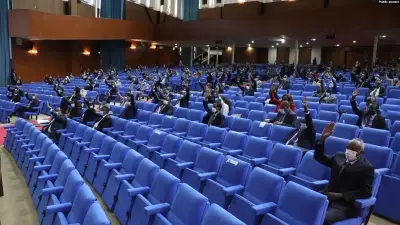
Ethiopia's newly elected House of Peoples' Representatives opens on 5 October, when the government for a new five-year term will be constituted, Speaker Tagesse Chafo announced (Fana, 23 September); the National Election Board gave the Prosperity Party 438 of the 486 seats declared from the 1 June election, while 38 constituencies in Tigray and eight in Amhara did not vote (The Reporter, 21 June). Earlier in the week the Security Council holds its fourth straw poll for UN Secretary-General on 29 September, with Senegal's Macky Sall and Uganda's Olara Otunnu the only African candidates (United Nations), and Botswana turns 60 on 30 September, Lesotho on 4 October.
3 sources
Ethiopia seats its new parliament on 5 October — with Tigray's 38 seats empty
Ethiopia's newly elected House of Peoples' Representatives opens on 5 October, when the government for a new five-year term will be constituted, Speaker Tagesse Chafo announced (Fana, 23 September); the National Election Board gave the Prosperity Party 438 of the 486 seats declared from the 1 June election, while 38 constituencies in Tigray and eight in Amhara did not vote (The Reporter, 21 June). Earlier in the week the Security Council holds its fourth straw poll for UN Secretary-General on 29 September, with Senegal's Macky Sall and Uganda's Olara Otunnu the only African candidates (United Nations), and Botswana turns 60 on 30 September, Lesotho on 4 October.
3 sources
 Botswana turns 60 in a diamond slump — Khama's rarest number was never the mine
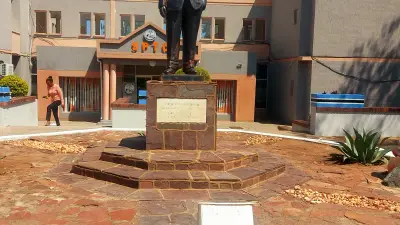
Botswana marks 60 years of independence on 30 September with its economy shrinking: the Ministry of Finance estimates GDP fell 2.8% in 2024 and 0.4% in 2025, and mineral revenue for 2025/26 was revised down 23.4% to P12 billion on weak diamond sales (Bank of Botswana, Monetary Policy Statement, February 2026). Government debt is projected at 38.8% of GDP by the end of 2025/26 and 44.7% by the end of 2026/27, above the 40% statutory limit — two years after voters, on 30 October 2024, removed the Botswana Democratic Party that had governed since 1966 (Al Jazeera, 1 November 2024).
3 sources
Botswana turns 60 in a diamond slump — Khama's rarest number was never the mine
Botswana marks 60 years of independence on 30 September with its economy shrinking: the Ministry of Finance estimates GDP fell 2.8% in 2024 and 0.4% in 2025, and mineral revenue for 2025/26 was revised down 23.4% to P12 billion on weak diamond sales (Bank of Botswana, Monetary Policy Statement, February 2026). Government debt is projected at 38.8% of GDP by the end of 2025/26 and 44.7% by the end of 2026/27, above the 40% statutory limit — two years after voters, on 30 October 2024, removed the Botswana Democratic Party that had governed since 1966 (Al Jazeera, 1 November 2024).
3 sources
 Tigray seizes three airports — Ethiopia's growth did not buy the Pretoria peace
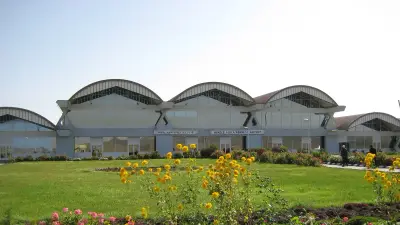
Tigray forces seized the civilian airports of Mekelle, Axum and Shire and detained federal personnel, the African Union said on 23 September, as fighting spread across Tigray, Afar and Amhara three days after seven armed movements, among them the Tigray People's Liberation Front, formed an alliance to overthrow Abiy Ahmed's government (Al Jazeera, 24 September). AU Commission chairperson Mahmoud Ali Youssouf called the seizures inconsistent with the Pretoria Agreement signed on 2 November 2022, which ended a war that killed hundreds of thousands, and asked Olusegun Obasanjo, the AU's High Representative for the Horn of Africa, to engage the parties urgently.
2 sources
Tigray seizes three airports — Ethiopia's growth did not buy the Pretoria peace
Tigray forces seized the civilian airports of Mekelle, Axum and Shire and detained federal personnel, the African Union said on 23 September, as fighting spread across Tigray, Afar and Amhara three days after seven armed movements, among them the Tigray People's Liberation Front, formed an alliance to overthrow Abiy Ahmed's government (Al Jazeera, 24 September). AU Commission chairperson Mahmoud Ali Youssouf called the seizures inconsistent with the Pretoria Agreement signed on 2 November 2022, which ended a war that killed hundreds of thousands, and asked Olusegun Obasanjo, the AU's High Representative for the Horn of Africa, to engage the parties urgently.
2 sources