 KemetLeads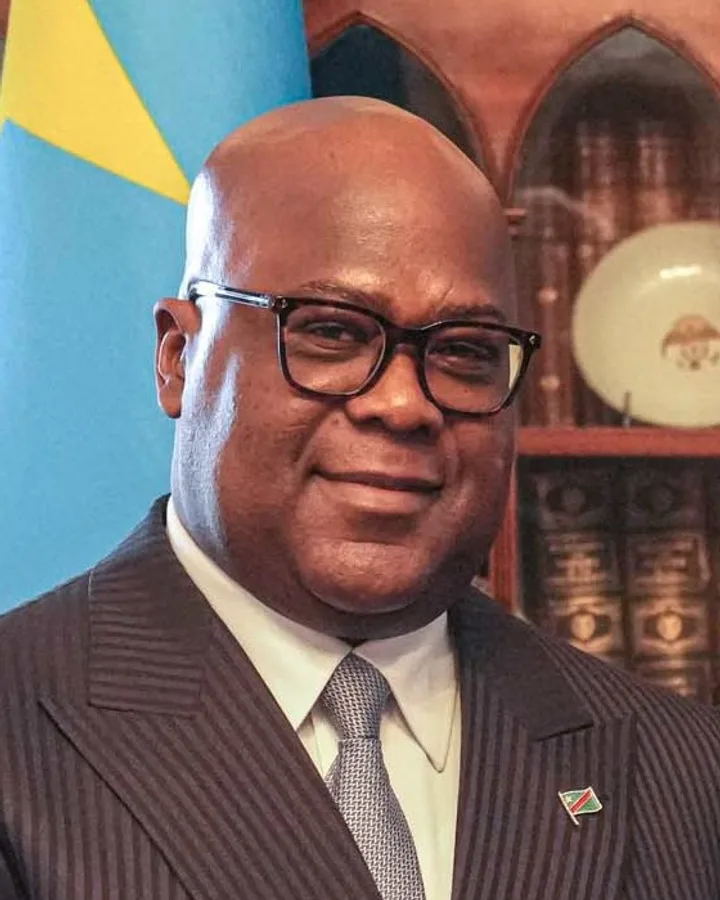
Félix Tshisekedi
The son of Congo's most famous opposition leader who took the presidency in the country's first peaceful transfer of power — under a cloud of disputed votes.
KemetLeads Scorecard
How we score →A questioned 2019 election and talk of constitutional revision temper a record of relative openness.
P = percentile among the other African countries over the same years. Rows 1–4 are country-level change during the tenure — evidence, not proof.
Our read
A presidency born of a questioned count, now flirting with constitutional revision — the two weakest checks on his card are the two that decide where Congo goes next.
Power 2019–
Two-term limit in force; second term began in 2024, with a constitutional review under debate.
Sources: Archigos 4.1 (Goemans, Gleditsch & Chiozza) · Powell & Thyne coup data V2026.08.29 · term-limit conduct coded by KemetLeads
The rise
Son of veteran opposition icon Étienne Tshisekedi, he spent decades in exile in Belgium before leading his father's UDPS party. He was declared winner of the December 2018 election against Joseph Kabila's chosen successor.
What they did
His inauguration in January 2019 marked the first peaceful handover of power in Congo's history. He later broke with Kabila to build his own governing coalition, introduced free primary education, and won a second term in 2023.
The full picture
Multiple observers, including the influential Catholic Church and rival Martin Fayulu, concluded the 2018 result did not reflect the actual vote, alleging a backroom deal with Kabila. His tenure has been dogged by persistent insecurity in the east, where the M23 conflict has worsened dramatically.
Why it matters
He embodies both the promise and the limits of democratic transition in a fragile giant: a peaceful handover that may also have been a managed one, and the immense difficulty of governing a vast, war-torn, resource-rich state.
“"The Congo we want is a Congo of peace, a Congo reconciled with itself."”