 KemetLeads
Tigray seizes three airports — Ethiopia's growth did not buy the Pretoria peace
Tigray seizes three airports — Ethiopia's growth did not buy the Pretoria peace
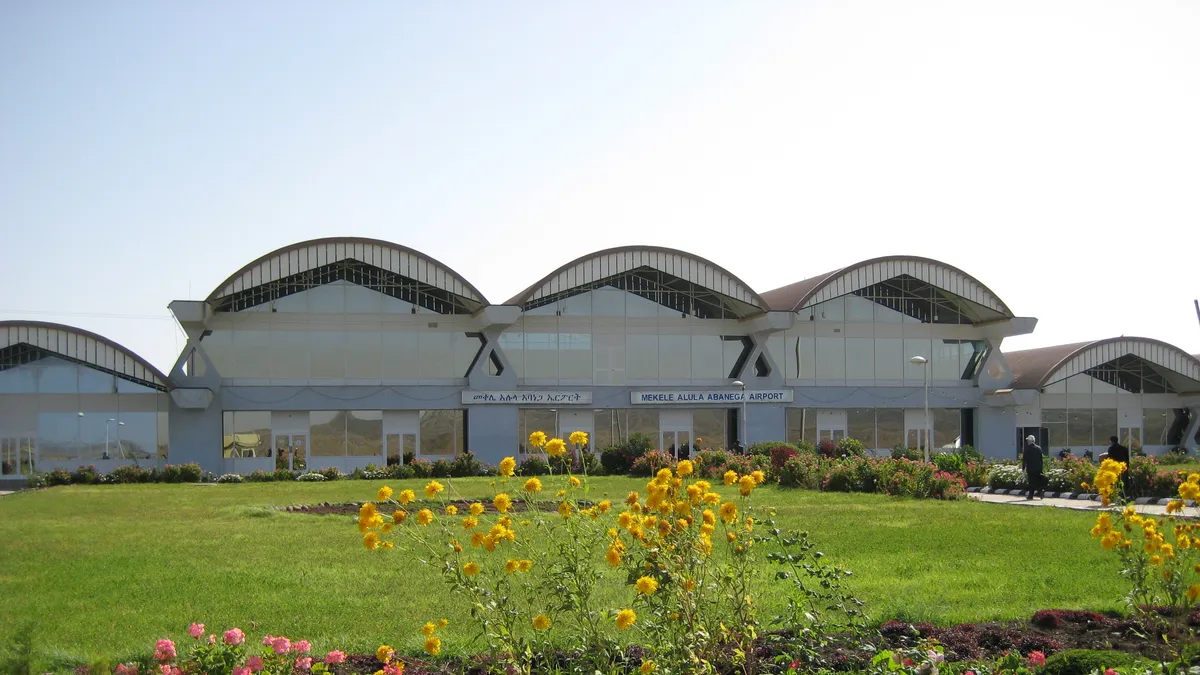
Tigray forces seized the civilian airports of Mekelle, Axum and Shire and detained federal personnel, the African Union said on 23 September, as fighting spread across Tigray, Afar and Amhara three days after seven armed movements, among them the Tigray People's Liberation Front, formed an alliance to overthrow Abiy Ahmed's government (Al Jazeera, 24 September). AU Commission chairperson Mahmoud Ali Youssouf called the seizures inconsistent with the Pretoria Agreement signed on 2 November 2022, which ended a war that killed hundreds of thousands, and asked Olusegun Obasanjo, the AU's High Representative for the Horn of Africa, to engage the parties urgently.
The African Union brokered the Pretoria Agreement, and on 23 September its Commission chairperson put in writing that the seizure of three civilian airports by Tigray forces is inconsistent with it — the guarantor is now also the first witness. Our Scorecard makes this hard to read as a story of economic failure: over 2018–2024 Ethiopia's development delivery sits at the 79th percentile of African countries, GDP per head up 18% while the median African country's was flat, yet rights and participation rank at P36, and our record check on Abiy Ahmed already fails on the war of 2020–22. Growth that fast did not buy a settlement, and the alliance formed on 20 September shows why: its seven movements come from Tigray, Amhara, Oromia, Somali, Afar and Benishangul-Gumuz, which makes this a quarrel with the federal bargain rather than with one region — though the government's claim, made by spokesperson Billene Seyoum, that Eritrea funds it is one Asmara denies. Our Power block adds that Ethiopia's constitution sets no term limit on the prime minister, and Abiy has held the office since April 2018: in demanding a transitional government, the alliance is asking for an exit the constitution never scheduled. The real test is whether Olusegun Obasanjo can bring the two Pretoria signatories back to one table before the fighting in Afar and Amhara opens fronts the 2022 text was never written to cover.
Whether Obasanjo has the two Pretoria signatories back at one table by the agreement's fourth anniversary on 2 November, and whether Ethiopian Airlines resumes flights to Mekelle before then.
SourcesAfrican Union Commission, Chairperson's statement on northern Ethiopia, 23 Sep · Al Jazeera, 24 Sep
More from the Brief
 Botswana turns 60 in a diamond slump — Khama's rarest number was never the mine
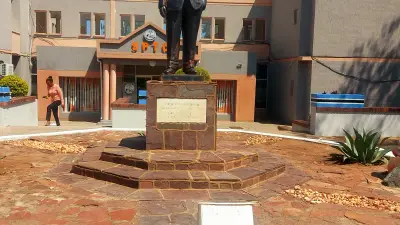
Botswana marks 60 years of independence on 30 September with its economy shrinking: the Ministry of Finance estimates GDP fell 2.8% in 2024 and 0.4% in 2025, and mineral revenue for 2025/26 was revised down 23.4% to P12 billion on weak diamond sales (Bank of Botswana, Monetary Policy Statement, February 2026). Government debt is projected at 38.8% of GDP by the end of 2025/26 and 44.7% by the end of 2026/27, above the 40% statutory limit — two years after voters, on 30 October 2024, removed the Botswana Democratic Party that had governed since 1966 (Al Jazeera, 1 November 2024).
3 sources
Botswana turns 60 in a diamond slump — Khama's rarest number was never the mine
Botswana marks 60 years of independence on 30 September with its economy shrinking: the Ministry of Finance estimates GDP fell 2.8% in 2024 and 0.4% in 2025, and mineral revenue for 2025/26 was revised down 23.4% to P12 billion on weak diamond sales (Bank of Botswana, Monetary Policy Statement, February 2026). Government debt is projected at 38.8% of GDP by the end of 2025/26 and 44.7% by the end of 2026/27, above the 40% statutory limit — two years after voters, on 30 October 2024, removed the Botswana Democratic Party that had governed since 1966 (Al Jazeera, 1 November 2024).
3 sources
 Morocco votes Wednesday — four fixtures this week, none that can change a head of state
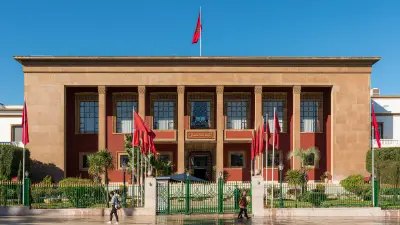
Morocco votes on 23 September for the 395 seats of the House of Representatives, with 15,801,162 registered voters, 28 parties and 7,288 candidacies on 1,850 lists (Maroc.ma, the government portal, 21 September). The same day the South African Reserve Bank announces its Monetary Policy Committee decision with the repo rate at 7.00%; the ECOWAS Court of Justice sits in Dakar for its international conference until 25 September; and the UN General Assembly's general debate runs from 22 to 28 September.
3 sources
Morocco votes Wednesday — four fixtures this week, none that can change a head of state
Morocco votes on 23 September for the 395 seats of the House of Representatives, with 15,801,162 registered voters, 28 parties and 7,288 candidacies on 1,850 lists (Maroc.ma, the government portal, 21 September). The same day the South African Reserve Bank announces its Monetary Policy Committee decision with the repo rate at 7.00%; the ECOWAS Court of Justice sits in Dakar for its international conference until 25 September; and the UN General Assembly's general debate runs from 22 to 28 September.
3 sources
 Tear gas in Kinshasa — Tshisekedi's third term runs through a locked clause
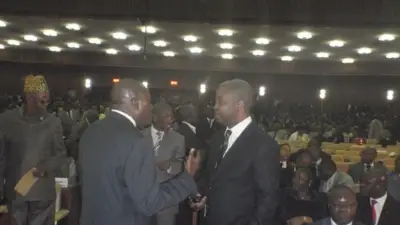
Police fired tear gas in Kinshasa on 15 September, the day the parliamentary session opened, as the opposition C64 coalition marched on the National Assembly against a constitutional revision that could let Félix Tshisekedi run again; at least 10 people were arrested, and marches were also broken up in Lubumbashi and Uvira (Al Jazeera, 15 September). The Constitutional Court validated the referendum law on 30 July, and on 13 September Tshisekedi signed an ordinance creating a national-dialogue committee placed under his direct authority (Radio Okapi, 13 September); his second term ends in 2028.
3 sources
Tear gas in Kinshasa — Tshisekedi's third term runs through a locked clause
Police fired tear gas in Kinshasa on 15 September, the day the parliamentary session opened, as the opposition C64 coalition marched on the National Assembly against a constitutional revision that could let Félix Tshisekedi run again; at least 10 people were arrested, and marches were also broken up in Lubumbashi and Uvira (Al Jazeera, 15 September). The Constitutional Court validated the referendum law on 30 July, and on 13 September Tshisekedi signed an ordinance creating a national-dialogue committee placed under his direct authority (Radio Okapi, 13 September); his second term ends in 2028.
3 sources