 KemetLeads
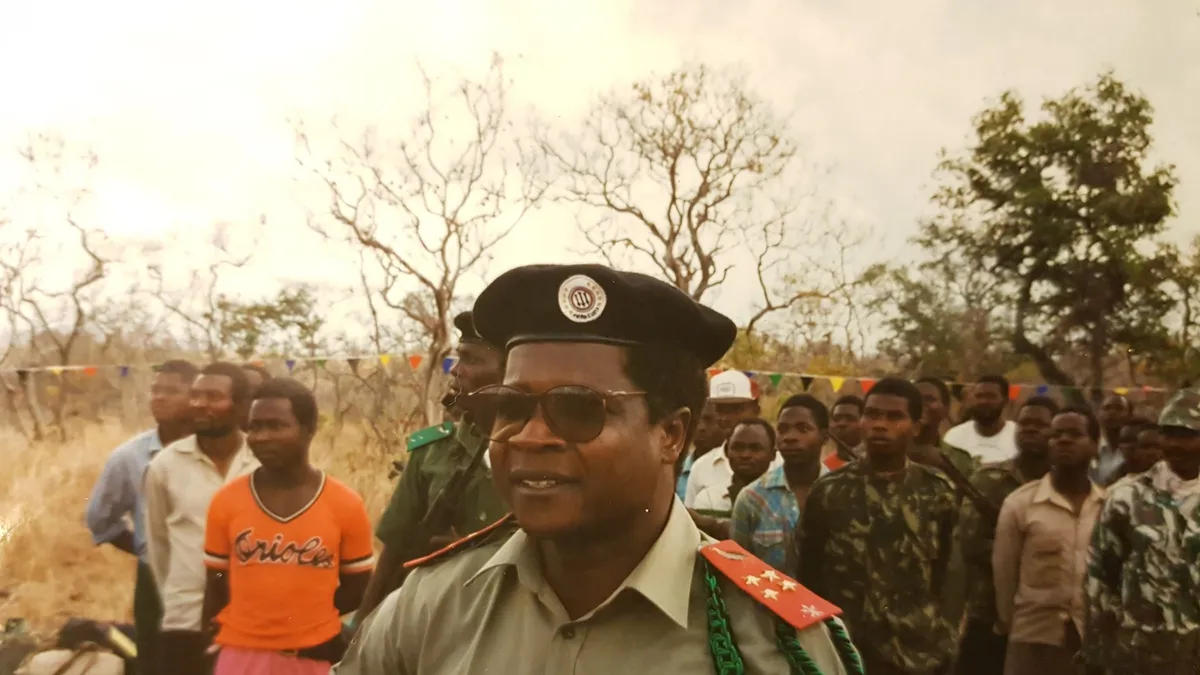
Mozambique's Rome peace turns 34 — it held by turning an army into a party
Mozambique's Rome peace turns 34 — it held by turning an army into a party
On 4 October 1992 in Rome, President Joaquim Chissano and Renamo's leader Afonso Dhlakama signed the General Peace Agreement that ended 14 years of civil war; a UN mission of some 6,500 troops and observers then oversaw the demobilisation of more than 76,000 soldiers and Mozambique's first multiparty elections, held from 27 to 29 October 1994, in which Renamo won 37.8% of the legislative vote and Dhlakama 33.7% of the presidential one (United Nations, ONUMOZ). Renamo returned to arms in October 2013 after a government raid on its camp, and a new accord was signed in Maputo on 6 August 2019 by President Filipe Nyusi and Renamo's leader Ossufo Momade (Mail & Guardian, 8 August 2019).
The Rome agreement was less a handshake than a timetable for turning an army into a party: its protocols required both sides to canton their troops and new parties to be formed, and two years later Renamo held 37.8% of the vote — a defeat it could live inside. Applying our Scorecard's method to that window, Mozambique's electoral democracy score on V-Dem rose by 0.28 between 1992 and 1995 while the median African country's moved by 0.01 — the 94th percentile, the fourth-largest gain of 54 countries; over 2022–2025, the years since the Pretoria Agreement, Ethiopia's fell by 0.04 while the median barely moved, P25. The difference is not only in the signatures: in May 2025 Ethiopia's election board revoked the registration of the Tigray People's Liberation Front, the party that signed in Pretoria and now fights in an alliance seeking to overthrow Abiy Ahmed's government, and on 5 October a new parliament opens with Tigray's 38 seats empty. Rome is no fairy tale — Renamo kept enough men under arms to go back to war in 2013, and it took the Maputo accord of 2019 to end that — so the lesson cuts both ways: a party without disarmament did not hold, and disarmament without a party offers no road back at all. We said on 2 October that the 2018 peace with Eritrea was never built, only held; the real test for Pretoria, four weeks before its fourth anniversary, is whether anyone offers the TPLF what Rome offered Renamo — a ballot it can lose without losing everything.
Whether Abiy's first address to the new parliament after 5 October names any political route back for the TPLF, and whether the two Pretoria signatories meet before the agreement's fourth anniversary on 2 November.
SourcesUnited Nations, ONUMOZ mission record: the General Peace Agreement, demobilisation and the 1994 election results · Mail & Guardian on the Maputo peace accord, 8 Aug 2019 · The Eastleigh Voice on the election board's deregistration of the TPLF, 14 May 2025
More from the Brief
 Ethiopia and Eritrea cut ties — the Nobel peace was signed by two men, not two states
Ethiopia's foreign ministry declared ten Eritrean diplomats in Addis Ababa persona non grata on 1 October, gave them 48 hours to leave and announced the closure of its embassy in Asmara, citing “direct and indirect acts of hostility and belligerence” (Addis Insight, 1 October); the same day Eritrea's foreign ministry severed “all diplomatic ties”, saying Ethiopia had pursued for three years “a publicly pronounced declaration of war” over sovereign access to the sea (Ministry of Foreign Affairs, Asmara, 1 October). The two governments had restored relations in declarations Abiy Ahmed and Isaias Afwerki signed in Asmara and Jeddah in July and September 2018, which the Norwegian Nobel Committee cited when it awarded Abiy the 2019 Peace Prize (Nobel Committee, 11 October 2019).
3 sources
Ethiopia and Eritrea cut ties — the Nobel peace was signed by two men, not two states
Ethiopia's foreign ministry declared ten Eritrean diplomats in Addis Ababa persona non grata on 1 October, gave them 48 hours to leave and announced the closure of its embassy in Asmara, citing “direct and indirect acts of hostility and belligerence” (Addis Insight, 1 October); the same day Eritrea's foreign ministry severed “all diplomatic ties”, saying Ethiopia had pursued for three years “a publicly pronounced declaration of war” over sovereign access to the sea (Ministry of Foreign Affairs, Asmara, 1 October). The two governments had restored relations in declarations Abiy Ahmed and Isaias Afwerki signed in Asmara and Jeddah in July and September 2018, which the Norwegian Nobel Committee cited when it awarded Abiy the 2019 Peace Prize (Nobel Committee, 11 October 2019).
3 sources
 Burkina opens a 164-tonne gold refinery — in a country that mines 94
Captain Ibrahim Traoré inaugurated RAFFINOR-BF, Burkina Faso's first gold refinery, in Ouagadougou on 28 September: it cost more than 11 billion CFA francs, financed mainly by the state through the National Company of Precious Substances (SONASP) with private partners, and can refine 164 tonnes a year, rising to 515 tonnes in a second phase (Sidwaya, 28 September). The country produced 94 tonnes of gold in 2025, 43 of them from artisanal and semi-mechanised mining, Prime Minister Jean-Emmanuel Ouédraogo told the Transitional Legislative Assembly on 30 January (Mines Actu, 30 January).
3 sources
Burkina opens a 164-tonne gold refinery — in a country that mines 94
Captain Ibrahim Traoré inaugurated RAFFINOR-BF, Burkina Faso's first gold refinery, in Ouagadougou on 28 September: it cost more than 11 billion CFA francs, financed mainly by the state through the National Company of Precious Substances (SONASP) with private partners, and can refine 164 tonnes a year, rising to 515 tonnes in a second phase (Sidwaya, 28 September). The country produced 94 tonnes of gold in 2025, 43 of them from artisanal and semi-mechanised mining, Prime Minister Jean-Emmanuel Ouédraogo told the Transitional Legislative Assembly on 30 January (Mines Actu, 30 January).
3 sources
 Ethiopia seats its new parliament on 5 October — with Tigray's 38 seats empty
Ethiopia's newly elected House of Peoples' Representatives opens on 5 October, when the government for a new five-year term will be constituted, Speaker Tagesse Chafo announced (Fana, 23 September); the National Election Board gave the Prosperity Party 438 of the 486 seats declared from the 1 June election, while 38 constituencies in Tigray and eight in Amhara did not vote (The Reporter, 21 June). Earlier in the week the Security Council holds its fourth straw poll for UN Secretary-General on 29 September, with Senegal's Macky Sall and Uganda's Olara Otunnu the only African candidates (United Nations), and Botswana turns 60 on 30 September, Lesotho on 4 October.
3 sources
Ethiopia seats its new parliament on 5 October — with Tigray's 38 seats empty
Ethiopia's newly elected House of Peoples' Representatives opens on 5 October, when the government for a new five-year term will be constituted, Speaker Tagesse Chafo announced (Fana, 23 September); the National Election Board gave the Prosperity Party 438 of the 486 seats declared from the 1 June election, while 38 constituencies in Tigray and eight in Amhara did not vote (The Reporter, 21 June). Earlier in the week the Security Council holds its fourth straw poll for UN Secretary-General on 29 September, with Senegal's Macky Sall and Uganda's Olara Otunnu the only African candidates (United Nations), and Botswana turns 60 on 30 September, Lesotho on 4 October.
3 sources